

When the first teaser footage for GMMTV’s Scarlet Heart Ullavee dropped in late 2026, it grabbed the attention of television fans right across Asia. Adapting Tong Hua’s famous novel Startling by Each Step, which had already seen massive television runs in China and South Korea, was an enormous undertaking for the Thai creative team. Directed by Kanittha Kwanyu and driven by an all-star cast including Tontawan Tantivejakul, Metawin Opas-iamkajorn, Phuwin Tangsakyuen, Nanon Korapat, and Tay Tawan, the project was planned from day one as a major flagship release. Instead of pinning the plot to a specific, recorded chapter of Thai history, the show chose to build a fantasy world called Ullavee. In this fictional kingdom, time travel, court intrigue, and sweeping romance unfold against an opulent, imaginary backdrop.
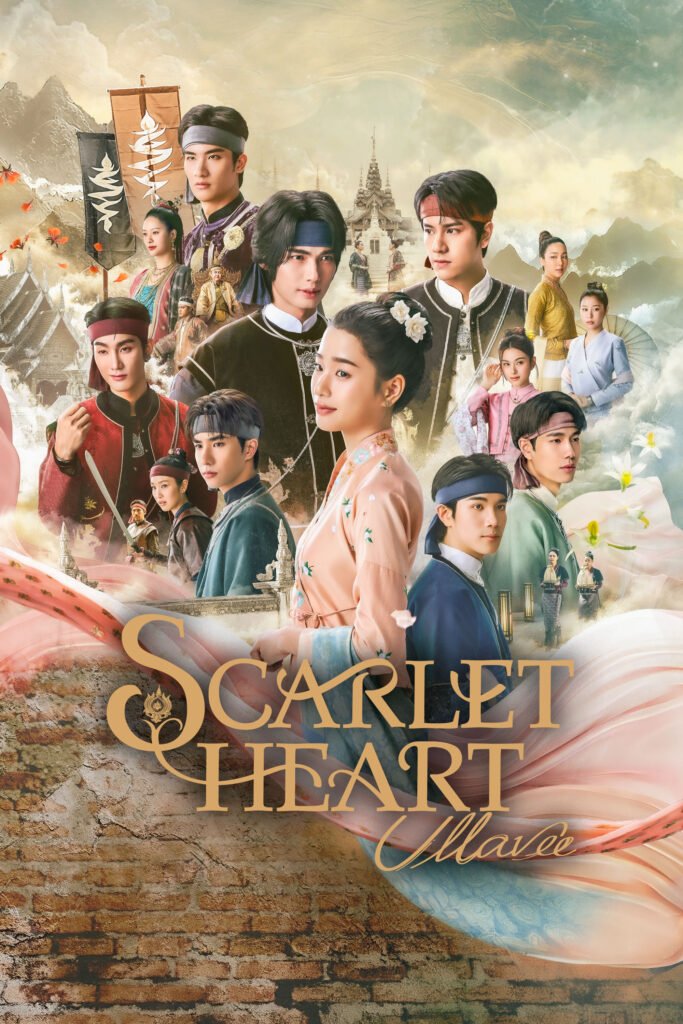
Alongside the online excitement, the early preview clips sparked an intense, emotional discussion about cultural heritage and representation. Viewers, cultural observers, and historians across mainland Southeast Asia, especially in Myanmar, pointed out several striking visual details that looked unfamiliar in traditional central Thai court history. Commentators highlighted royal garments that strongly mirrored nineteenth-century Konbaung-era Mandalay, especially the distinct cut, wrap, and flowing train of the royal htamein or htamathein, complete with tiered embroidery and unique waist wraps. Dancers and traditional artists also noticed ceremonial choreography that closely matched the Rakhine oil-lamp dance, known as the See Mee Khwet dance, an ancient Buddhist performance originating from Rakhine State.
Because the international umbrella title of the production is Scarlet Heart Thailand, these specific cultural elements quickly became the focus of intense digital debate. For international viewers watching Southeast Asian period drama for the first time, visual traditions introduced under that national banner could easily be viewed as purely Thai in origin. The debate pushed questions of creative freedom, cultural credit, and historical memory right into the spotlight.
Looking at this moment constructively means stepping away from angry social media comments. It means listening to the real concerns of cultural neighbors, understanding the creative vision of the production studio, examining the deep, shared history of the region, and finding a positive way forward together.
Understanding the Importance of Living Heritage
To understand why viewers in Myanmar felt so deeply about the footage, you have to look at how traditional heritage is guarded today. Classical dances, courtly fabrics, and temple rituals carry centuries of ancestral pride. In Myanmar, where historical traditions have survived through political shifts, colonial takeovers, and decades of economic isolation, preserving artistic memory is an important, sacred responsibility for artists, historians, and everyday families.
The court wardrobe of the Konbaung dynasty represents the final peak of pre-colonial royal fashion, kept alive by generations of master silk weavers, tailors, and dancers. In the same way, the Rakhine oil-lamp dance is a spiritual devotion performed to offer illumination to the Buddha, lovingly protected by the Arakanese community. When these distinct cultural creations show up in a major regional production without upfront context, community members can feel a deep sense of historical displacement. The frustration shared by viewers in Myanmar and regional cultural groups was rooted in a natural desire for visibility, respect, and proper acknowledgment.
Traditional Southeast Asian arts still get relatively limited time on global streaming platforms compared to Western or East Asian pop culture. Seeing their traditional heritage shown to millions of viewers under the national label of a neighboring country sparked a genuine worry: that a global audience might permanently credit their unique customs, patterns, and spiritual dances to another nation. That concern comes from authentic cultural pride and a desire to make sure the original artisans and custodians get proper credit on the international stage.
The Studio Perspective and the Art of Worldbuilding
On October 23, 2026, GMMTV released an official statement addressing these concerns and explaining the creative idea behind the show. The studio explained that Scarlet Heart Ullavee was written as a fantasy period drama set inside a completely fictional kingdom. The design team looked for visual inspiration across the broad cultural tapestry of mainland Southeast Asia, pulling together artistic threads from ancient Lanna, northern Tai communities, historical trade posts, and traditional Myanmar. In fantasy worldbuilding, costume designers and directors often blend different regional architecture, textiles, and musical cues to build a setting that feels ancient, grand, and mythic.
From the viewpoint of Thai costume designers, pulling from diverse regional traditions was meant as an appreciation of the shared beauty of Southeast Asia. Thai court culture has a centuries-old tradition of welcoming, adapting, and celebrating regional artistry within royal ceremonies and dramatic performances. The creative team viewed these visuals as a respectful tribute to the intricate textile work and performing arts of the broader Golden Peninsula. Fantasy television regularly uses artistic license, letting creative teams focus on visual storytelling, mood, and dramatic grandeur rather than textbook archaeological replicas. The meeting of these two perspectives highlights an interesting modern reality. A studio can set out to pay artistic tribute to the aesthetic beauty of its region, while the custodians of those specific arts can feel that the adaptation leaves out their identity if the roots are not clearly stated. Recognizing both sides helps move the conversation away from anger, turning a tense online moment into a real opportunity for better cultural understanding.
The Shared Roots of the Mainland Mandala
Looking deeper into this discussion requires stepping back into Southeast Asia’s real history, long before modern nation-states, border posts, and rigid maps ever existed.
Historically, this region lived under what scholars call the mandala system. Political authority spread outward from royal palace centers like Ayutthaya, Chiang Mai, Ava, Bago, Luang Prabang, and Vientiane. Instead of rigid borders marked by border fences, these territories were fluid, overlapping networks shaped by treaties, seasonal alliances, and trade. Across this open world, people, ideas, fashions, and craft techniques traveled easily. When royal families intermarried or formed alliances, they exchanged fine textiles, instruments, and master artisans as royal gifts. When regional wars broke out, conquering rulers brought back master weavers, metalworkers, architects, and dancers to enrich their own capital cities. Over centuries of daily contact, the material cultures of Siamese, Lanna, Shan, Mon, and Burmese kingdoms became closely tied together.
The northern region of Thailand, once the independent kingdom of Lanna, offers a clear example of this shared history. For more than two centuries, from the mid-sixteenth century to the late eighteenth century, Lanna was part of the Burmese empire. During that long era, royal clothing, temple woodwork, lacquerware methods, and fabric patterns blended continuously. Northern Thai royal dress absorbed the refined tastes of Ava and Pegu, while Burmese artisans picked up northern Tai techniques.
When Princess Dara Rasmi of Chiang Mai married King Chulalongkorn (Rama V) in Bangkok in the late nineteenth century, she arrived with a royal household that brought northern fabrics and traditions directly into the Siamese Grand Palace. Her flowing outfits, which mixed Lanna silk weaving with the long silhouettes and waist wraps typical of Shan and Burmese courts, helped reshape high fashion in Bangkok. Even today, traditional textiles in northern Thailand carry artistic traits that come from generations of cross-border trade, intermarriage, and royal dialogue with neighboring communities.
Remembering this connected history shows that the arts of mainland Southeast Asia belong to a wide family tree. Modern borders were drawn relatively recently, mostly during the colonial era of the late nineteenth and early twentieth centuries. The ancestral craft traditions of the region grew out of hundreds of years of everyday contact and shared life. When viewers see visual similarities between northern Thai clothing and Myanmar royal dress today, they are looking at the natural legacy of a shared historical neighborhood.
Avoiding the Trap of Online Nationalism
In the internet era, social media algorithms often strip away deep history to chase outrage. The online debate around Scarlet Heart Ullavee showed how fast digital nationalism can heat up. When complex questions about fabric histories and dance roots get shrunk down into short comment threads, calm conversation disappears. Extreme voices on all sides rush to claim total ownership, turning shared artistic traditions into shouting matches.
Nationalist arguments end up hurting everyone. They risk damaging the genuine friendliness and goodwill that everyday people in Thailand and Myanmar share. When commentators use harsh words or brush off the real feelings of their neighbors, they lose sight of the hospitality, warmth, and mutual respect that both cultures value. At the same time, using a fantasy television show as an excuse to make broad attacks against Thailand or its entertainment workers ignores the hard work of local creators who want to showcase Southeast Asian art to a wider world. Neither extreme helps protect heritage or tell good stories. True cultural appreciation only works in an environment of open curiosity, respect, and patience. The real goal should be to bring clarity, calm tensions, and remind audiences that regional culture is a shared treasure meant to bring people closer, not push them apart.
A Constructive Way Forward
Moving past this controversy means using practical, positive ideas that respect every perspective. With Southeast Asian entertainment reaching larger international audiences every year, production houses have an incredible chance to practice smart cultural diplomacy. The best place to start is clear and generous credit. Openly acknowledging creative inspirations makes a show look better, not worse. When a production team uses a culturally distinct ceremony like the Rakhine oil-lamp dance or borrows the regal outline of Konbaung royal wear, adding clear on-screen notes or behind-the-scenes clips lifts the whole project up. An opening title card or a short educational video explaining that the imaginary land of Ullavee draws inspiration from Lanna, Tai, Chinese, and Myanmar traditions turns a potential argument into a proud celebration of regional culture.
Clear attribution accomplishes several great things at the same time. It gives international viewers a helpful introduction to the diverse cultures of Southeast Asia. It makes sure the communities that kept these arts alive get the global credit they have earned. It also protects the production and the host country from accusations of erasing other cultures, proving that Thai studios treat regional heritage with honesty and genuine respect. Studios around the world use this collaborative approach with great success. When productions consult with regional cultural advisers, textile historians, and master choreographers, the final show feels much richer and more authentic. Bringing in cultural experts from neighboring countries strengthens the worldbuilding in fantasy dramas, ensuring that while the story stays imaginary, the respect for real-world traditions remains clear and solid.
A Shared Stage for Southeast Asian Storytelling
The discussion around Scarlet Heart Ullavee points toward a bright future for Southeast Asian entertainment. For decades, international viewers have enjoyed big-budget historical epics from East Asia, following cinematic sagas from China, South Korea, and Japan. Southeast Asia has an equally incredible collection of history, palace lore, complex textiles, spiritual dances, and timeless human stories about love, loyalty, and duty.
Thailand’s entertainment industry has the studios, talent, and streaming reach to bring these stories to the wider world. By taking a thoughtful lead in regional storytelling, Thai television can create an open, welcoming stage for the whole region. Handled with care and transparency, local productions can elevate the arts and traditions of neighboring communities, showing global audiences the shared brilliance of Southeast Asia.
The world of Ullavee, with its misty mountains, detailed palace halls, and emotional story, gives fans a great fantasy escape. Yet the real beauty of the production comes from the living cultures that inspired it. The warm glow of the lanterns, the rustle of handwoven silks, the graceful hand movements of the dancers, and the poise of its characters remind us of the artistic skill that has thrived across Thailand, Myanmar, and neighboring lands for generations.
Instead of letting this premiere cause friction, we can treat it as a helpful learning moment. It is an opportunity to appreciate the common roots of mainland Southeast Asia, listen to our cultural neighbors with respect, and build a creative industry that values every thread in our shared history. Recognizing that our cultural heritage is connected ensures that as Southeast Asian storytelling continues to grow on the world stage, it does so with pride, friendship, and lasting unity.