

- The Genesis: Royal Mentorship, Cold War Soft Power, and Miss Thailand
- The Khun Daeng Monopoly (2000–2018)
- The TPN Renaissance (2019–2023)
- Corporate Turbulence: Buyouts, Courtrooms, and the Nawat Era (2022–2026)
- Ten Thai Icons from the Miss Universe Pagaent
- 1. Apasra Hongsakula (Miss Universe 1965)
- 2. Porntip “Bui” Nakhirunkanok (Miss Universe 1988)
- 3. Farung Yuthithum (2007)
- 4. Chalita “Namtan” Suansane (2016)
- 5. Maria Poonlertlarp (2017)
- 6. Paweensuda “Fahsai” Drouin (2019)
- 7. Amanda Obdam (2020)
- 8. Anchilee Scott-Kemmis (2021)
- 9. Anna Sueangam-iam (2022)
- 10. Anntonia Porsild (2023)
- The Enduring Mirror
If you want to understand the nervous system of modern Thai pop culture, you cannot ignore the pageant stage. In Thailand, beauty contests are not quaint, retro television broadcasts or kitschy weekend filler. They are cultural diplomacy run at full volume, multi-million-dollar corporate war rooms, digital mobilization engines that rival international football fan clubs, and the single most reliable conveyor belt into mainstream film and television stardom.
At the absolute apex of this national fixation sits the Miss Universe franchise. Over the span of seven decades, the title evolved from a post-war statecraft tool designed to broadcast constitutional modernity into a fiercely commercialized powerhouse. It endured a thirty-year international drought, reinvented its entire operational DNA under the high-fashion, advocacy-first leadership of TPN Global, and weathered the chaotic corporate crosswinds of international buyouts and high-stakes media rivalries.
Through every reinvention, one underlying question has driven the frenzy: how does a modern Thai woman step onto a global stage, look an international audience in the eye, and project authentic Khwam Pen Thai (ความเป็นไทย), Thainess, without reducing herself to a tourist postcard?
The Genesis: Royal Mentorship, Cold War Soft Power, and Miss Thailand
The roots of Thailand’s connection to the global stage reach back to the constitutional reforms of the 1930s. Following the 1932 revolution that ended absolute monarchy, the newly formed government established the Nang Sao Sayam (Miss Siam) competition in December 1934. The contest wasn’t an advertising stunt; it was an official civic initiative administered by the Ministry of Interior to celebrate the new Constitution and signal to the world that Siam was a progressive, civilized nation.
Renamed Nang Sao Thai (Miss Thailand) in 1939 to match the country’s official name change under Field Marshal Plaek Phibunsongkhram, the pageant became an annual showcase of civic poise, domestic etiquette, and classical posture. In 1954, Amara Asavananda placed as runner-up and traveled to Long Beach, California, becoming the first Thai woman to compete at Miss Universe.
The true geopolitical earthquake struck eleven years later in Miami Beach. In 1965, an eighteen-year-old high school student named Apasra Hongsakula took the crown, becoming the first representative from Southeast Asia to win Miss Universe. Apasra was not just an independent hopeful; she was coached directly by Her Majesty Queen Sirikit in royal deportment, walking posture, and styling. In the middle of the Vietnam War, with American military infrastructure rapidly expanding across Thailand, Apasra’s victory was celebrated as a masterstroke of soft power: living proof of Thai dignity and diplomatic alignment with the West.
Twenty-three years later, in Taipei in 1988, Porntip “Bui” Nakhirunkanok completed the second half of that foundation. An eighteen-year-old Thai-American raised in Southern California, Bui brought an unforced bilingual charm and a radiant smile that swept the judges off their feet. When she accepted the crown, she bypassed superficial generalities and spoke directly about the impoverished children of Thailand, instantly setting the gold standard for pageantry as an engine of sustainable civic philanthropy.
During this foundational era, Miss Thailand was run through a joint production between the Wachirawut College Alumni Association and broadcast powerhouse BBTV Channel 7, pulling massive, single-digit market shares and shutting down street traffic during prime-time broadcasts.
The Khun Daeng Monopoly (2000–2018)
As the international Miss Universe Organization (MUO) modernized its commercial model at the turn of the millennium, structural cracks appeared in Bangkok. In 2000, the international franchise rights officially split from the traditional Miss Thailand pageant, giving birth to Miss Thailand Universe under the firm hand of Surang “Khun Daeng” Prempree, the legendary managing director of Channel 7.
For nearly two decades, Khun Daeng ran the pageant as a private farm system for Channel 7’s dominant prime-time lakorns. Winners were groomed for television acting rather than global stage warfare. The ideal was quiet grace, modesty, and classical sweetness, qualities that pleased conservative domestic drama viewers but left Thai delegates invisible on international stages.
Between 1989 and 2005, Thailand went entirely unplaced at Miss Universe. While Venezuelan academies were engineering stage walks and the Philippines began assembling its powerhouse pageant training bootcamps (Kagandahang Flores and Aces & Queens), Thailand treated the world finals like an extended vacation.
The turning point came when Bangkok hosted Miss Universe 2005 at the Impact Arena. Seeing Canada’s Natalie Glebova take the crown on Thai soil woke up a passionate, internet-savvy generation of domestic pageant fans (phaen nang ngam). In 2012, after Khun Daeng departed Channel 7, she transferred the franchise to Channel 3, rebranding it as Miss Universe Thailand (MUT). A grassroots realization took hold: if Thailand wanted to compete against international powerhouses, the days of relying solely on sweet smiles and natural beauty were over. It was time to build a real training infrastructure.
The TPN Renaissance (2019–2023)
In 2018, Bangkok hosted the Miss Universe pageant for the third time, an operation managed by TPN 2018 Co., Ltd., led by Somchai Cheewasutthanon, Pui Sankosik, and Alice Phanrat. The staging, arena-grade lighting, and seamless production values caught the attention of MUO leadership. In 2019, TPN Global was officially granted the multi-year license for Miss Universe Thailand.
Under Pui Sankosik, MUT underwent a total institutional reinvention:
- Reality-Show Bootcamps: TPN scrapped the polite hotel-ballroom press calls and transformed the competition into a high-stakes, broadcast reality format. Contestants were thrown into editorial runway challenges, spontaneous press scrums, and rigorous masterclasses on speech, social advocacy, and athletic conditioning.
- The “Real U” Philosophy: Moving away from safe, pre-scripted talking points, TPN sought out biculturally fluent, articulate women who possessed clear personal philosophies, emotional grit, and the media fluency required to handle live international press.
- The Unbroken Placement Streak: The results spoke for themselves. TPN assembled an unmatched run on the international stage: Paweensuda “Fahsai” Drouin (Top 5, 2019), Amanda Obdam (Top 10, 2020), Anchilee Scott-Kemmis (whose 2021 #RealSizeBeauty movement went viral worldwide), and Anna Sueangam-iam (ImpactWave Award winner, 2022).
- The 35-Year High: The apex of the TPN era arrived in El Salvador in November 2023. Anntonia Porsild marched into the world finals, navigated every cut, and finished as First Runner-Up to Nicaragua’s Sheynnis Palacios. It was Thailand’s highest placement since Bui Simon won in 1988, sparking massive victory motorcades down Sukhumvit Road and setting a new benchmark for commercial brand ambassadorships.
Corporate Turbulence: Buyouts, Courtrooms, and the Nawat Era (2022–2026)
While TPN was producing historic finishes on stage, the corporate ground underneath the brand was shaking violently.
In October 2022, Thai media entrepreneur Anne Jakkaphong Jakrajutatip’s JKN Global Group acquired the Miss Universe Organization for $20 million, marking the first time in history that a Southeast Asian woman held the master keys to the brand. But the triumph was short-lived. By November 2023, facing severe liquidity pressures and bond repayment deadlines, JKN filed for debt restructuring and business rehabilitation in the Central Bankruptcy Court of Thailand.
To stabilize its balance sheet, JKN sold a 50 percent equity stake in MUO to Legacy Holding Group, led by Mexican entrepreneur Raúl Rocha Cantú, for $16 million in January 2024.
Against this backdrop of international corporate restructuring, fractures cracked open between TPN Global and the central franchise. TPN had invested years building MUT into an elite, high-fashion institution, making it difficult to reconcile its creative direction with shifting licensing demands and administrative micromanagement.
Enter Nawat Itsaragrisil.
Nawat, the outspoken founder and president of the rival Miss Grand International (MGI) system, had spent a decade building an empire around viral, high-velocity entertainment. His model rejected quiet diplomacy in favor of aggressive live-stream e-commerce, polarizing internet feuds, reality television drama, and instant social media volume.
When the Miss Universe Thailand license migrated into the operational orbit of MGI and affiliated commercial partnerships, it detonated the pageant community. The high-fashion, social-advocacy ethos championed by TPN clashed head-on with Nawat’s unapologetic, commercialized entertainment style. The resulting public spats, operational shifts, and organizational friction fractured the once-unified Thai fan base, leaving an institution that had just celebrated its greatest international finish in thirty-five years navigating deep brand fatigue and an uncertain identity.
Ten Thai Icons from the Miss Universe Pagaent
Through every era of bureaucratic shifts and commercial drama, the core legacy of Miss Universe Thailand belongs to the women who stepped onto that stage and commanded the global conversation.
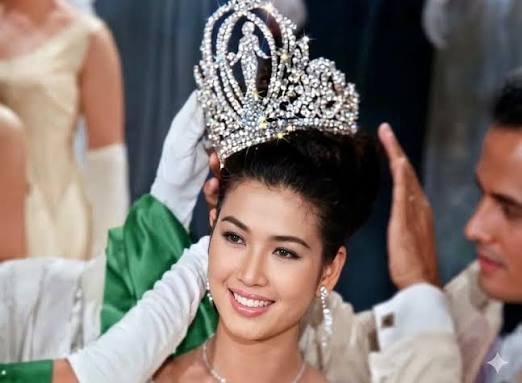
1. Apasra Hongsakula (Miss Universe 1965)
Standing 164 centimeters tall, slight compared to the towering European and Latin American frontrunners, Apasra arrived at the Miami Beach Auditorium in July 1965 as an eighteen-year-old student from Bangkok.
Her training was a matter of statecraft. Her Majesty Queen Sirikit personally oversaw Apasra’s preparation, guiding her in classical posture, facial poise, and traditional textile styling. On stage, Apasra projected a serene, unruffled composure, often described by international journalists at the time as “regal calm.” When host Jack Linkletter announced her as the winner, she made history as the first woman from Southeast Asia to wear the crown.
Apasra showed the post-war Western world that Thai grace wasn’t fragile or passive and showed that it was it was glowing and at once, commanding. Decades later, she remains a national icon whose timeless elegance demonstrated how classical Siamese royal deportment could be adapted into universal prestige.

2. Porntip “Bui” Nakhirunkanok (Miss Universe 1988)
In May 1988 in Taipei, eighteen-year-old Porntip “Bui” Nakhirunkanok completed what remains one of the most culturally significant moments in modern Thai media. Raised in Pasadena, California, Bui was a bicultural revelation: she spoke articulate, unaccented American English, but her physical manners were pure, deferential Thai.
She began the telecast by winning the Best National Costume award, wearing a glittering gold, contemporary Thai silk ensemble inspired by traditional royal court attire. During the final interview round, when asked what she would do if crowned, she delivered an answer that defined an entire era:
Bui rak dek.
Following her victory, Bui turned that promise into structural reality. She established the Angels Wings Foundation, a philanthropic organization that has funded rural schools, built orphanages, provided scholarships to thousands of underprivileged students, and directed massive disaster relief efforts following the catastrophic 2004 Indian Ocean tsunami. Bui proved that being “Thai” wasn’t about wearing a silk sash and representing it graciously through a wave and a smile, rather, it was about backing up cultural warmth with concrete civic duty.
3. Farung Yuthithum (2007)
Standing an athletic 183 centimeters, Farung entered the pageant scene at a time when Thailand had spent nearly two decades trapped in an international non-placement drought. The domestic industry was paralyzed by the belief that Thai contestants were too short, too demure, or too polite to register on an international stage.
At Miss Universe 2007 in Mexico City, Farung shattered that mental barrier. Striding down the runway with long, confident strides, she broke the eighteen-year curse, advancing to the Top 15.
Farung redefined what a Thai beauty queen looked like. She wasn’t an ingénue waiting for a television producer’s script; she was an editorial fashion model who commanded space. Her success opened the door for professional runway models, darker-skinned contestants, and athletic women to enter national pageantry, shifting the domestic conversation toward physical conditioning and modern runway power.
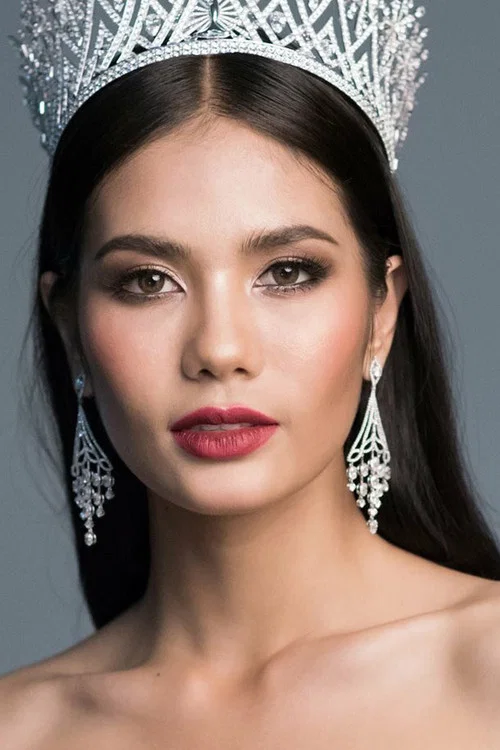
4. Chalita “Namtan” Suansane (2016)
Namtan was a quiet, unassuming microbiology student at Mahasarakham University when she won Miss Universe Thailand 2016. What followed in Manila remains the blueprint for modern digital pageant campaigns.
Under the guidance of visionary stylists and creative directors, Namtan underwent a breathtaking high-fashion transformation. She arrived at the Mall of Asia Arena armed with seventeen designer suitcases, staging daily street-style photoshoots that treated Manila’s sidewalks like Paris Fashion Week. Her team pioneered high-resolution, instant-upload digital fashion content, turning every outfit change into an event.
During the preliminary rounds, she unveiled the iconic “Jewel of Thailand” national costume, an architectural triumph containing over 100,000 Swarovski crystals, inspired by traditional royal dresses worn by Queen Sirikit. Namtan finished in the Top 6, but her real legacy was institutional: she energized Thailand’s digital fandom, proving that an organized online coalition could drive millions of international impressions and transform a pageant delegate into a bona fide global fashion muse.
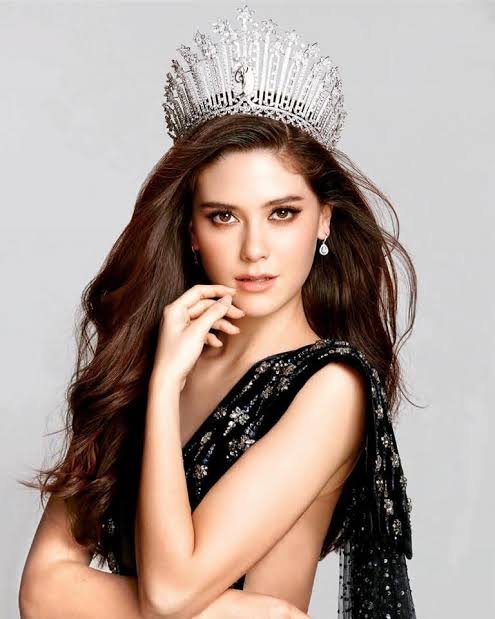
5. Maria Poonlertlarp (2017)
Holding a master’s degree in international business from Stockholm Business School and fluent in Thai, English, Swedish, and French, Maria walked onto the Miss Universe 2017 stage in Las Vegas and changed the intellectual standards of Thai pageantry forever.
Maria placed in the Top 5, but her influence cut much deeper than a runway walk. At a time when beauty queens were coached to give safe, neutral, and agreeable answers, Maria refused to stay in a box. In her final interview, when asked about the most important social movement of her generation, she spoke candidly about youth demographic shifts and social agency.
Following her reign, she leveraged her platform to dismantle long-standing domestic taboos. She founded environmental campaigns against plastic waste, openly championed teenage sex education and reproductive health access in a country where such topics were rarely discussed on prime-time television, and consistently spoke up for civil liberties and democratic civic engagement. Maria proved that a Thai titleholder could be modern, intellectual, and uncompromising in her personal ethics.

6. Paweensuda “Fahsai” Drouin (2019)
Fahsai’s journey to the Miss Universe stage is a masterclass in athletic grit and stubborn endurance. A Thai-Canadian graduate in kinesiology from the University of Calgary, Fahsai lost multiple national crowns: runner-up at Miss Thailand 2013, runner-up at Miss Universe Thailand 2017, and a near-miss at Miss Earth 2017.
Most competitors would have retired. Fahsai doubled down. She returned in 2019 to win the first MUT crown under the newly formed TPN Global banner, undergoing an intense, high-performance training program that overhauled her public speaking, mental focus, and stage agility.
At Miss Universe 2019 in Atlanta, she charged into the Top 5. Fahsai’s success resonated deeply with everyday working-class Thais because her career was defined by hard work over easy privilege. She showed young women that setbacks in competitive arenas are not permanent verdicts, and that structured, disciplined self-improvement can dismantle traditional industry gatekeeping.
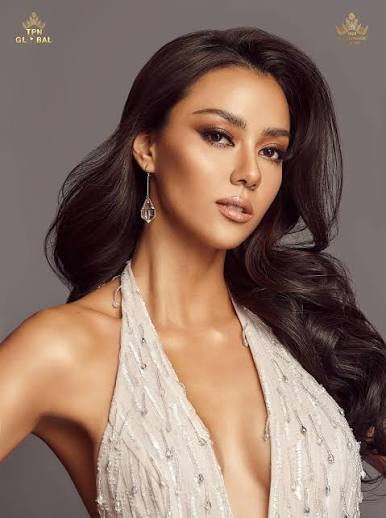
7. Amanda Obdam (2020)
Navigating the height of the COVID-19 pandemic, Amanda Obdam—a Thai-Canadian native of Phuket with a degree in business administration from the University of Toronto—represented the pinnacle of stage precision and social focus.
At Miss Universe 2020 in Hollywood, Florida, Amanda swept into the Top 10, mesmerizing viewers with her signature “Andaman Wave” evening gown walk, a masterclass in fluid, kinetic stage movement that mirrored the swells of her island hometown. Her evening gown, inspired by the Andaman Sea and crafted with thousands of hand-stitched beads, became an instant classic of contemporary Thai fashion design.
Simultaneously, Amanda launched her signature social initiative, Have You Listened, an advocacy campaign addressing the severe stigma surrounding mental health support across Thailand. By partnering with clinical specialists to provide accessible listening tools and mental health resources to young Thais isolated by pandemic lockdowns, Amanda demonstrated that Thai empathy (Namjai) could be channeled into concrete, modern public health solutions.
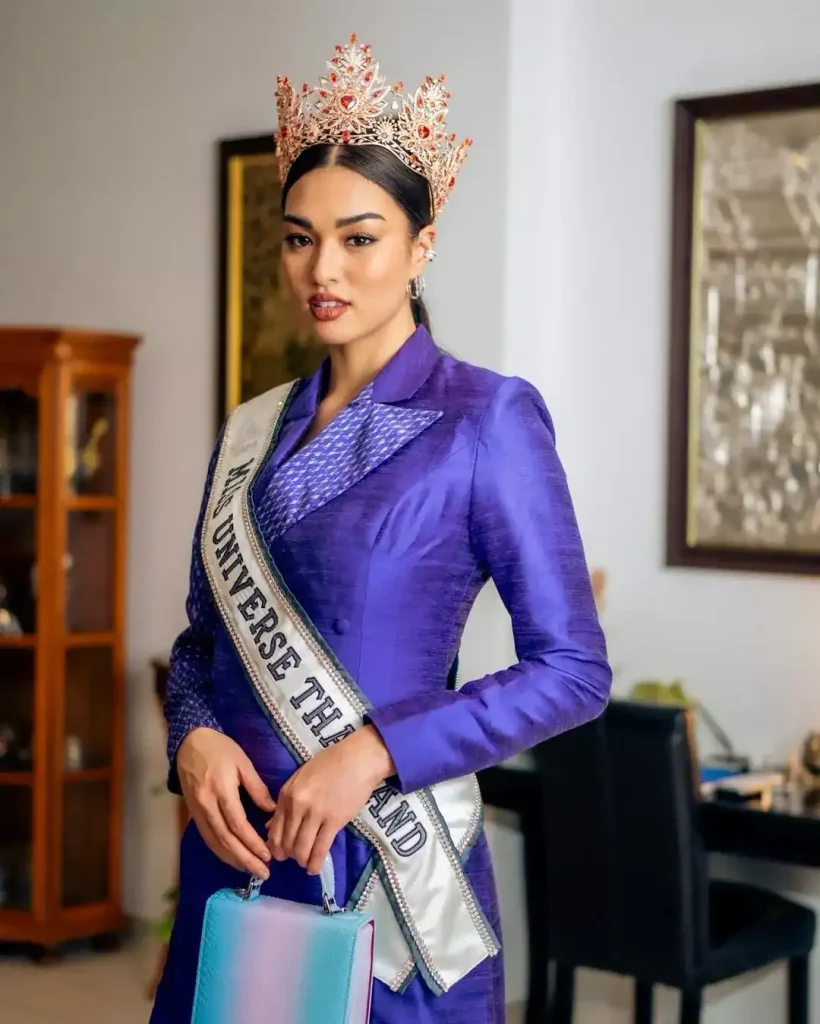
8. Anchilee Scott-Kemmis (2021)
In October 2021, twenty-two-year-old Anchilee Scott-Kemmis stood on the Miss Universe Thailand stage and set off a cultural earthquake. A former high school volleyball captain with a sociology degree from the University of Sydney, Anchilee stood 183 centimeters with an athletic, full-bodied frame.
She campaigned openly under the banner of #RealSizeBeauty, directly challenging the hyper-thin, skin-bleached aesthetic that had held a stranglehold on Thai fashion, television casting, and teenage psychology for decades. When she won the crown, it ignited an emotional national conversation about body dysmorphia, media bullying, and commercial beauty ideals.
Her platform sparked lasting corporate changes: Thai clothing brands began expanding sizing ranges, beauty campaigns started casting diverse body types, and schools began addressing weight-shaming in youth curricula. Anchilee proved that a pageant queen’s real impact is measured by the cultural walls she tears down, not the placement trophy she brings home.
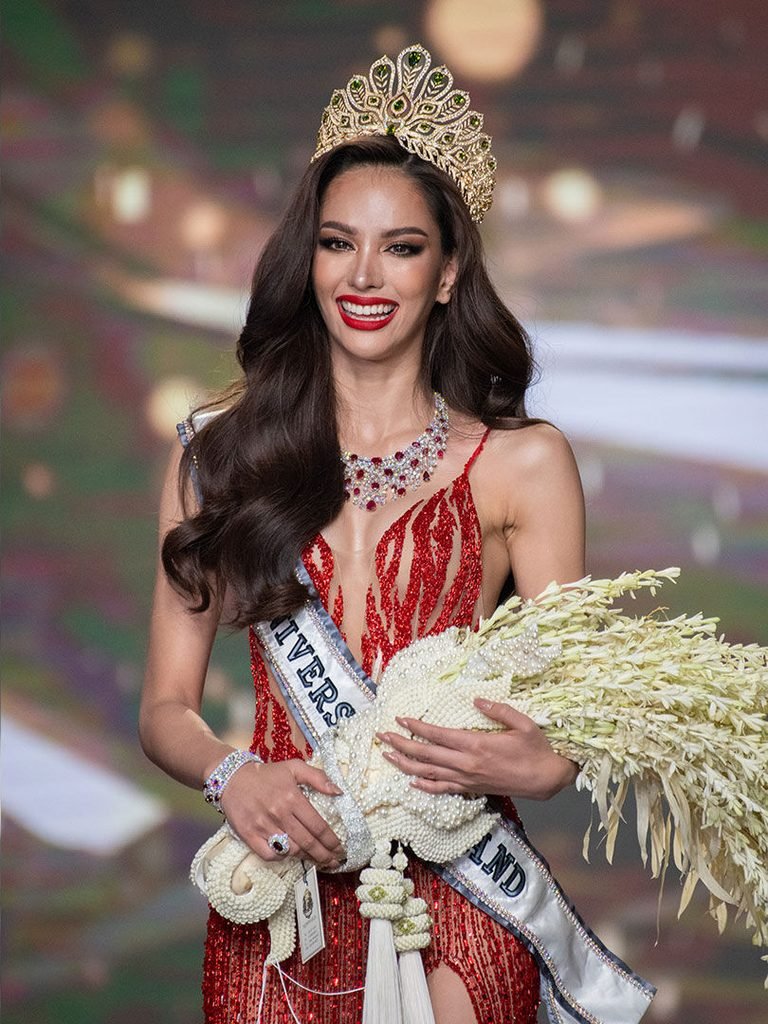
9. Anna Sueangam-iam (2022)
Anna’s triumph in 2022 remains one of the most moving human stories in the pageant’s history. Growing up in Bangkok, Anna was affectionately dubbed by the Thai public as Nang Ngam Kong Khaya (“The Garbage Beauty Queen”) because her father worked as a municipal trash collector and her mother worked as a street sweeper for the Bangkok Metropolitan Administration (BMA).
Anna spent her childhood riding along on municipal collection routes, collecting discarded toys and studying under the care of a Buddhist nun relative. She worked her way through Kasetsart University, earning a degree with first-class honors. When she captured the Miss Universe Thailand 2022 crown, it broke the long-held assumption that the national title was reserved solely for wealthy, international-school elites.
At Miss Universe 2022 in New Orleans, Anna stunned international critics with her preliminary evening gown, designed by the Thai label Manirat. Dubbed the “Hidden Precious Diamond Dress,” the gown was crafted from hundreds of discarded aluminum can pull-tabs, seamlessly intertwined with Swarovski crystals. It was an homage to her parents’ honest labor and a masterclass in upcycled sustainable fashion.
Anna won the global pageant’s Leadership Award, partnering with civil organizations to expand educational access for underprivileged children across Bangkok’s slums. She showed the world that authentic Thai pride doesn’t come from inherited wealth; it comes from unyielding perseverance and the dignity of honest work.

10. Anntonia Porsild (2023)
Anntonia Porsild is the ultimate competitor of modern Thai pageantry. Born to a Danish father and an Isan mother from Nakhon Ratchasima (Korat), Anntonia made history in 2019 by becoming the first Thai woman to win the Miss Supranational title in Poland.
Four years later, she took an enormous professional gamble: relinquishing her international crown to enter Miss Universe Thailand 2023. She ran the table domestically, building a coalition that united both traditional pageant purists and modern fashion fans.
At the 72nd Miss Universe in San Salvador, El Salvador, Anntonia delivered a flawless campaign. Wearing an evening gown inspired by the celestial light of the Nakhon Ratchasima night sky and performing a traditional wai that radiated effortless warmth, she advanced all the way to First Runner-Up, Thailand’s highest finish in thirty-five years.
Her homecoming in Bangkok paralyzed traffic across major avenues, drawing tens of thousands of citizens waving national flags. Through her Little Steps initiative, she directed private funds toward community-level social enterprise and financial literacy for rural women in the Northeast. Anntonia closed the golden age of TPN’s stewardship by proving that when world-class training, bilingual intelligence, and deep regional pride come together, Thai soft power can compete at the highest level of international entertainment.
The Enduring Mirror
From Apasra’s royal coaching in 1965 to Anntonia’s historic motorcade down Sukhumvit Road in 2023, Miss Universe Thailand has never been a simple beauty contest. It has always been a cultural mirror.
When the country wanted to prove its geopolitical alignment to the West, it crowned an elegant ambassador who charmed Miami. When it sought to declare itself an Asian Tiger economy, it crowned a charismatic Thai-American who captivated Taipei. And when it wrestled with modern anxieties around body image, corporate governance, and freedom of expression, its queens brought those battles straight onto the national stage.
The current corporate turmoil, legal restructuring, and franchise realignments will pass. What remains is an arena where Thai women have consistently seized the microphone, transformed personal platforms into international influence, and shown the rest of the world that Thainess is not a fragile artifact to be protected behind museum glass. It is an evolving, resilient, and unapologetic cultural force that knows exactly how to capture an international room.