

If your only window into modern Thai music is glossy T-Pop videos with synchronized dance routines and spotless luxury outfits, walking down a Bangkok street at night will give you a very different education. Step into any late-night bar, hop in a buzzing tuk-tuk, or walk past a neighborhood convenience store at 2:00 a.m., and the voice booming out of the speakers almost certainly belongs to YOUNGOHM.
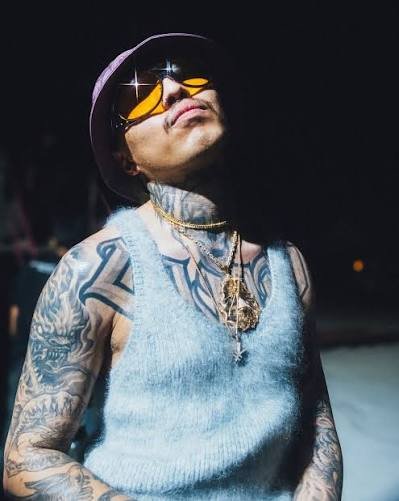
Born Ratthaphong Phoorisit in Bangkok on October 24, 1998, YOUNGOHM is Thailand’s ultimate anti-idol. In an Asian entertainment industry famous for grooming young stars inside strict corporate academies, he did the exact opposite. He never trained to dance. He never hired a PR team to polish his rough edges. He dropped out of university after a single morning, refused to sign with major record labels, and built one of the biggest independent music empires in Southeast Asia using little more than a microphone, an internet connection, and brutal honesty.
With over 6.4 million YouTube subscribers, more than 4.2 billion total YouTube views, and nearly 6 million Spotify followers, YOUNGOHM doesn’t just participate in Thai youth culture, he soundtracks it. For foreign travelers and music fans trying to understand what real life feels like for young people in Thailand today, there is no better place to start than his story.
The Half-Day College Dropout from Wat That Thong
Long before he was headlining international festivals like Rolling Loud Thailand, Ratthaphong Phoorisit was an ordinary Bangkok kid growing up around Ekkamai and attending Wat That Thong School, a temple school whose name he would later make famous across the country.
Like millions of teenagers in the early 2010s, he discovered hip-hop through YouTube when he was around 11 or 12 years old. He was captivated by Western rap stars who put “Young” in front of their names, so he paired it with his own Thai nickname, Ohm, creating the moniker YOUNGOHM. Just as important was his admiration for Illslick, a legendary independent Thai rapper and singer known for blending melodic, emotional singing with street-level storytelling. By age 12 or 13, Ohm was already scribbling rhymes and humming melodies in his notebooks.
When high school ended, he briefly tried following the traditional path expected of young Thai students. He was accepted into the performing arts program at the Faculty of Fine Arts at Srinakharinwirot University. He showed up for his very first day, sat through half a day of classes, realized traditional schooling had nothing to do with the music burning inside his head, and walked out for good.
To survive while chasing music, he took regular working-class gigs, even holding up promotional signs for condominiums on Bangkok streets. At night, he saved every baht he could to book cheap studio time, recording tracks and uploading them straight to social media. He got his first real taste of underground recognition competing on Rap Is Now, Thailand’s fiercely competitive rap battle league, making the top 32 in Season 2 before fighting his way into the final eight in Season 3 in 2016. He didn’t win the crown, yet every hip-hop fan in Bangkok suddenly knew his name.
Breaking the Internet Without a Record Label
In 2017, Thai mainstream radio was still dominated by clean-cut pop ballads and rock bands. Then YOUNGOHM dropped “Choey Moei” a laid-back, hypnotic, slightly defiant track whose title roughly translates to “acting cool” or “unbothered.”
The song blew the doors off the Thai music industry. It rocketed to number one on the Joox streaming charts, won Hip-Hop Song of the Year at the 2018 Joox Thailand Music Awards, and proved that an unsigned teenager working outside the studio system could out-stream the biggest corporate labels in Bangkok.
If skeptics thought “Choey Moei” was a fluke, YOUNGOHM answered them in 2019 with a one-two punch that turned him into a national phenomenon. First came “Doo White,” which racked up more than 55 million YouTube views in just two weeks. Shortly after, he released “Thararat” a song that practically became Thailand’s unofficial late-night national anthem.
Almost every Thai person under forty can recite its famous opening line by heart: “I haven’t slept yet, and it’s already almost 10 a.m.” “Thararat” shattered streaming records on Joox by hitting one million streams in 15 hours and pulled in 23 million YouTube views during its first seven days. Around this same period, he teamed up with his close friends and fellow underground standouts—including FIIXD, Younggu, and Diamond MQT, to form the ALREADY DEADD collective, bringing raw, chaotic energy to stages across all 77 provinces of Thailand.
Why Foreign Listeners Connect With His Sound
Even if you do not speak a word of Thai, YOUNGOHM’s music hits with an immediate emotional punch. Part of his secret is that he refuses to treat rap and singing as separate worlds.
Roughly 95 percent of his lyrics come straight from his own real-life experiences. Instead of hiding behind fancy poetry or vague metaphors, he writes the way people actually talk in Bangkok blunt, conversational, occasionally vulgar, and deeply vulnerable. One minute he is bragging about partying with his crew; the next, he is singing a melancholic, earworm chorus about loneliness, heartbreak, or the pressure of growing up too fast.
That range shines across his three landmark studio albums, each capturing a distinct chapter of his twenties:
- Bangkok Legacy (2020): His full-length debut captured the wild, unfiltered rush of young fame, friendship, and nightlife in Thailand’s capital, quickly crossing hundreds of millions of streams.
- Thatthong Sound (2023): Named after his old Bangkok high school, this record turned nostalgic neighborhood memories and upbeat Thai party rhythms into a massive nationwide cultural moment. When Rolling Loud made its Asian debut in Thailand in 2023, tracks from Thatthong Sound echoed from every street corner and nightclub in the country.
- Fai Glang Khuen (Night Lights, 2025): Marking a major artistic shift, YOUNGOHM stepped back from the wild party crowds to write and craft most of the album on his own. Driven by massive singles like “Nakorn Dara” and “11 Month,” the project leaned heavily into moody, nocturnal pop-rap melodies and quiet self-reflection, quickly surpassing 360 million streams on Spotify alone.
By 2026, with sharp new releases like “Royal Flush” he continues to evolve without ever handing over his master recordings or creative control to a major corporate label.
Speaking Up When Other Stars Stay Quiet
What truly separates YOUNGOHM from manufactured pop idols is his willingness to risk his popularity by telling the truth about himself and his country.
In Thailand, celebrities are traditionally expected to smile, avoid controversy, and never talk about politics or personal struggles. YOUNGOHM threw that rulebook in the trash. During the 2020–2021 pro-democracy protests in Bangkok, he openly voiced support for young demonstrators and spoke out against the use of force during the Pathum Wan intersection crackdown, weaving sharp commentary on freedom of expression directly into his lyrics.
He has been equally fearless about his own mental health. In 2022, YOUNGOHM publicly shared with his millions of fans that he had been diagnosed with bipolar disorder. In a culture where mental health was long treated as a whispered taboo, seeing Thailand’s biggest rap star speak openly about mood swings, isolation, and learning to take care of himself meant the world to a generation of young listeners fighting their own quiet battles.
The Real Voice of Modern Bangkok
If you want to understand modern Thailand beyond the postcards and tourist brochures, put on a pair of headphones and press play on YOUNGOHM. He is proof that you do not need a factory-built image to move millions of people. By staying fiercely independent, embracing his flaws, and turning his everyday Bangkok life into unforgettable melodies, Ratthaphong Phoorisit didn’t just become a rap star—he became the voice of a generation.