

The moment you step inside the royal courtyard of Wat Phra Kaew, Bangkok’s world-famous Temple of the Emerald Buddha, your eyes naturally shoot upward toward shimmering golden spires and tiered roofs. Then you turn toward the cloister gates, and twelve towering figures stop you right in your tracks.
Standing six meters tall, armored from head to toe in glittering mosaic glass, and gripping massive battle clubs with both hands, these are the Yak (or Yaksa), the legendary giant demon guardians of the Grand Palace.
To most first-time visitors, these fanged giants look like magnificent background sculptures or fierce monsters meant to frighten tourists. In Thai culture, however, they are anything but nameless statues. They are twelve specific, named characters on active, eternal guard duty, once-wild forces of chaos from Thailand’s national epic, the Ramakien (Siam’s retelling of the ancient Ramayana), who were tamed and honored with the sacred job of keeping dark spirits and negative energy away from the Emerald Buddha forever. Once you know how to read their colors, faces, and crowns like a character guide, every walk through Wat Phra Kaew turns into an unforgettable journey through Thai mythology.
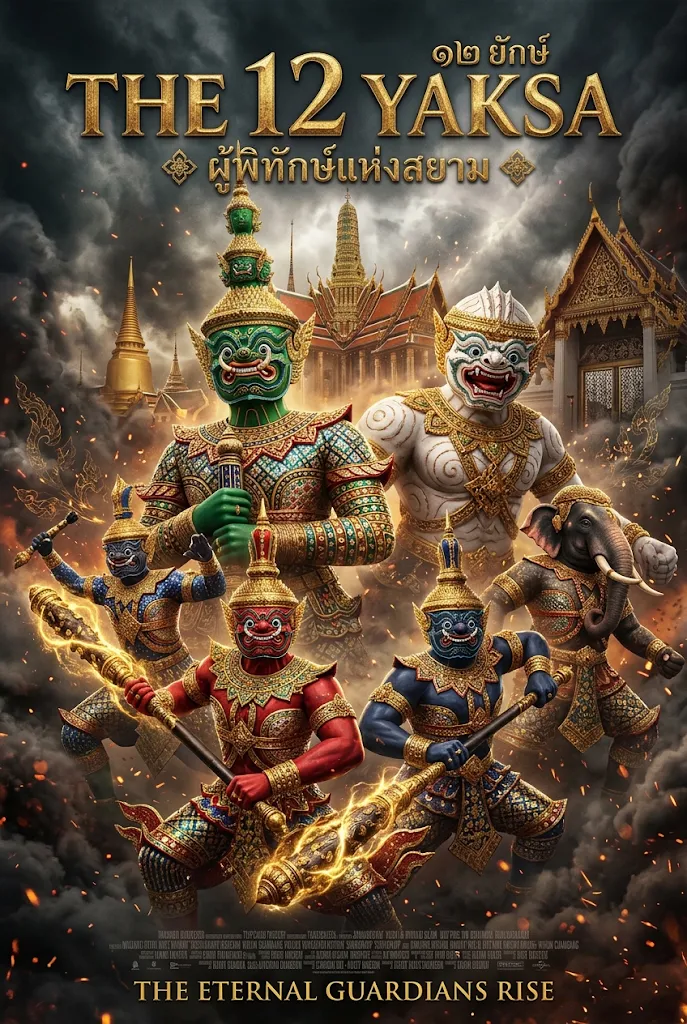
Why Twelve Giants Guard Six Gates
Commissioned during the reign of King Rama III in the early nineteenth century to restore and enrich the Grand Palace complex, the twelve Yak stand in facing pairs at the six entrances leading into the inner temple courtyard.
Look closely at the direction they are facing. Rather than staring out toward the street, the giants face inward toward the main ordination hall (ubosot) where the sacred Emerald Buddha sits. In Thai spiritual tradition, this posture shows their total devotion and constant vigilance. By resting the tips of their heavy krabong clubs firmly on the ground between their feet instead of raising them to strike, the giants signal that their raw power has been mastered and channeled entirely into peaceful protection.
Even better, each guardian wears a magnificent suit of traditional Thai royal armor crafted from brick and stucco and inlaid with thousands of hand-cut pieces of colored glass and ceramic tiles. As the Bangkok sun moves across the sky, their green, white, crimson, blue, and gold armor catches the light like living scales.
How to Read the Yak: Decoding Faces, Colors, and Crowns
In classical Thai art and Khon masked dance drama, you never have to guess who a character is—their appearance tells you their entire biography at a glance. Before meeting the individual giants, keep three visual clues in mind:
- Skin Color Reveals Lineage and Temperament: Every major Yak clan in the Ramakien carries a signature hue, from royal emerald green and blazing white to fiery vermilion red, deep indigo, and soft lavender.
- Eyes and Fangs Show Their Fighting Style: Some giants sport wide, bulging “crocodile eyes” (ta phlong) built to intimidate enemies from afar, while others have narrower, piercing “clamped eyes” (ta khop) suited to cunning strategists and sorcerers. Similarly, curved or straight tusks protruding from the corners of their mouths signal their royal rank and battle ferocity.
- Crowns Mark Royal Rank: A towering, multi-tiered pointed crown (mongkut) marks a sovereign king of a demon city, while distinct flame-like or gourd-shaped headdresses identify princes, generals, and magical allies.
Meet the Twelve Guardians: Gate-by-Gate Character Guide
As you stroll around the cloister of Wat Phra Kaew, here is how to identify the six pairs standing watch:
- Thotsakan (Green) and Sahasadecha (White): The Supreme King and the Thousand-Powered Titan: Guarding the gate nearest the Royal Pantheon stands the most famous pair in the entire temple. Thotsakan (known as Ravana in the Indian Ramayana) is the brilliant, formidable green-skinned king of Longka, wearing a tall tiered crown and famous in legend for having ten faces and twenty arms. Standing beside him is Sahasadecha, a colossal white-skinned giant whose body glows like polished ivory and who possesses the strength of a thousand warriors combined.
- Maiyarap (Pale Violet-Blue) and Wirun Chambang (Dark Blue): The Underworld Sorcerer and the Cloud-Rider: Along the eastern side, look for Maiyarap, easily recognized by his pale purplish-blue complexion and fierce tusks. Ruler of the subterranean realm of Badan, Maiyarap was a master of illusion and sleep magic who famously kidnapped Phra Ram into the underworld. His partner, Wirun Chambang, wears deep midnight-blue skin and possessed the magical ability to vanish into the clouds with his horse during battle.
- Suriyaphop (Vermilion Red) and Intarachit (Emerald Green): The Sun-Lord and the Sky-Commander: Near the northeastern entrance stand two of Longka’s deadliest champions. Suriyaphop, painted in blazing red like the midday sun, wielded a divine spear capable of turning the tide of war. Beside him stands Intarachit, Thotsakan’s favorite son and greatest general, a green-skinned warrior with a proud, upright crown who once defeated the god Indra in the heavens.
- Mangkorakan (Green) and Wirunhok (Dark Blue): The Dragon-Crested Prince and the Warrior Ally: Further along the courtyard wall, Mangkorakan stands out with green skin and a distinctive headdress inspired by mythical sea-dragons, while Wirunhok, dressed in deep blue armor, represents the loyal kings who answered Thotsakan’s call to defend Longka.
- Thotsakhirithon (Green) and Thotsakhiriwan (Reddish-Brown): The Elephant-Tusked Twin Princes: One of the easiest pairs to spot once you look closely at their faces, Thotsakhirithon (green) and Thotsakhiriwan (reddish-brown) are twin sons of Thotsakan born from a celestial elephant mother. Look just below their noses, both brothers feature a short, curved elephant trunk rising from the center of their upper lip, a charming detail straight out of Ramakien folklore.
- Chakkrawat (White) and Atsakanmara (Purple): The Four-Faced Emperor and the Immortal Lord: Completing the circle of twelve are Chakkrawat, a commanding white-skinned monarch crowned with extra faces symbolizing his far-reaching vision, and Atsakanmara, a royal purple-skinned giant ruler whose mythical immortality tested Phra Ram’s finest generals.
More Than Stone: Living Guardians of Bangkok
Spend a few quiet minutes near any of the six gates, and you will quickly see how deeply these giants are woven into everyday Thai life. Local visitors frequently pause at the base of the pedestals to press their palms together in a respectful wai, thanking the guardians for watching over the city and asking for safe travels and good fortune.
Far from being scary relics of the past, the Yak of Wat Phra Kaew embody one of Thailand’s most uplifting cultural ideas: that even the wildest, most intimidating forces in the universe can be transformed into loyal protectors of peace, beauty, and sacred heritage.