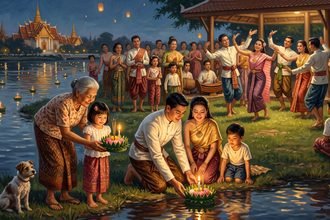

If you ask a first-time visitor to name the cultural capital of Thailand, almost everyone will point straight to Bangkok. Yet if you turn on the radio in a Bangkok taxi, check the highest-grossing Thai movies at the box office, or scroll through the biggest viral hits on Thai social media, you quickly discover a thrilling truth. The real creative engine of modern Thai pop culture beats in Isan.
Stretching across twenty provinces on the Khorat Plateau in northeastern Thailand, Isan is home to roughly one-third of the nation’s population. Historically defined by sweeping rice paddies, the mighty Mekong River, and a resilient agricultural lifestyle, Isan has transformed over the past decade from an overlooked rural heartland into Thailand’s boldest cultural superpower. Through unstoppable music, box-office-shattering cinema, infectious regional humor, and global superstars, Isan pride is rewriting the rules of Thai entertainment.
A Culture Built on Resilience, Humor, and Muan
To understand why Isan storytelling resonates so deeply across Thailand and beyond, you have to understand the spirit of the region itself. Life on the Khorat Plateau historically meant navigating dry seasons, monsoons, and generations of migration to Bangkok and overseas for work. Out of that shared experience grew a culture defined by fierce family loyalty, grounded humility, and an irrepressible sense of joy known in the local Lao-Isan dialect as muan (pure, infectious fun). Rather than letting hardship turn into bitterness, Isan people turned everyday life into music, comedy, and community celebration.
When millions of Isan workers, students, and artists moved to Bangkok over the decades, they brought their language, values, and rhythms with them. Instead of fading into the big city, Isan culture quietly became the shared heartbeat of the entire country.
The Soundtrack of the Nation: Mor Lam and Luk Thung Go Global
Nowhere is Isan’s cultural dominance clearer than in music. Two genres rooted in northeastern life, Mor Lam (traditional Lao-Isan rhythmic storytelling) and Luk Thung (Thai country music), regularly outperform sleek urban pop on Thai streaming platforms.
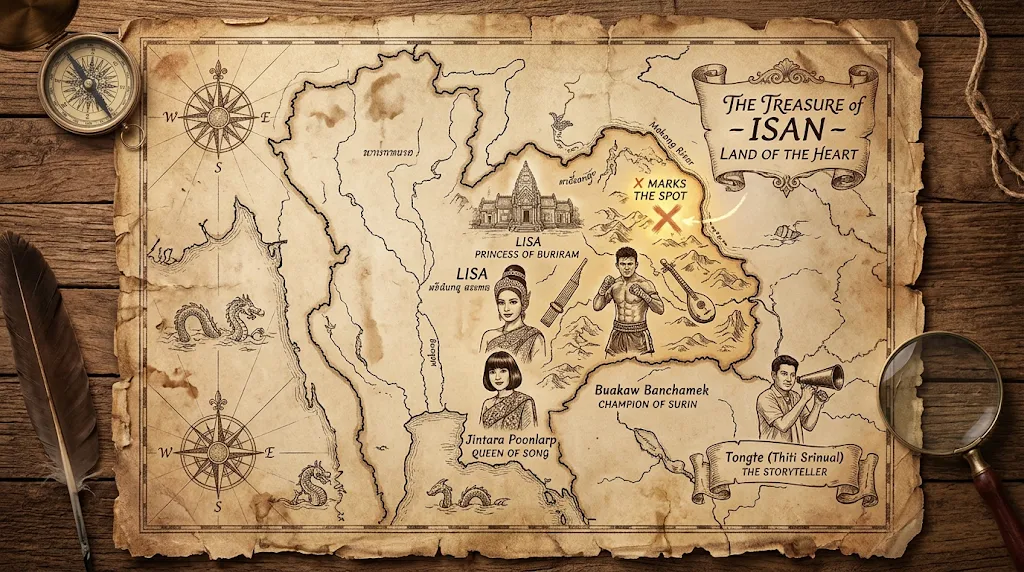
Driven by the hypnotic, buzzing bamboo pipes of the khaen mouth organ and the electric twang of the three-stringed phin lute, Isan music captures real human emotion without pretense. Iconic trailblazers like Jintara Poonlarp, Tai Orathai, Siriporn Ampaipong, and Monkaen Kaenkoon paved the way by singing honestly about homesickness, factory shifts, and love in their own native dialect.
Today, a fearless new generation has fused those ancient northeastern grooves with rock, hip-hop, and festival bass. Artists like Joey Phuwasit, whose soulful anthem “Na Na Thong” blends Isan vocal soul with modern pop-rock, BLE Patumrach, Lamyai Haithongkham, and The Paradise Bangkok Molam International Band have carried Isan rhythms from local temple fairs straight onto international festival stages across Europe and Asia.
The Cinema Revolution: How Isan Stories Conquered the Thai Box Office
For years, mainstream Thai movies and television dramas were overwhelmingly filmed in Bangkok, starring central-Thai characters speaking standard Bangkok dialect. That era ended dramatically when filmmakers from Isan decided to tell their own stories in their own voice.
Starting with beloved indie hits like Tai Baan The Series and culminating in the historic 2023 phenomenon The Undertaker (Sapparer), directed by Thiti Srinual (Tongte), northeastern cinema shattered every box-office expectation in Thailand. Filmed in rural Sisaket province with local actors speaking authentic Isan dialect, The Undertaker earned over 700 million baht nationwide. It outperformed major Hollywood blockbusters simply by telling a deeply moving, hilarious, and spiritual story about grief, village friendship, and letting go.
Even on the global arthouse stage, Isan has inspired some of Southeast Asia’s most celebrated cinema. Internationally acclaimed directors like Apichatpong Weerasethakul (whose Uncle Boonmee Who Can Recall His Past Lives won the Palme d’Or at Cannes) and Banjong Pisanthanakun (director of the terrifying Isan folk-horror hit The Medium) drew directly from northeastern forests, spirit beliefs, and Mekong folklore to captivate audiences worldwide.
Global Icons Carrying Isan Pride Everywhere
Isan’s influence also shines through some of Thailand’s most recognizable global ambassadors. Global pop phenomenon Lisa Manobal of BLACKPINK was born in Buriram province in lower Isan, and her proud celebration of her hometown roots, including wearing traditional northeastern silk and spotlighting Buriram street culture, sparked massive pride across the region.
In sports and comedy, legends like Muay Thai icon Buakaw Banchamek (from Surin) and beloved comedian Mum Jokmok (from Yasothon) built international followings while staying completely true to their northeastern warmth, wit, and down-to-earth charm. Even in Thailand’s booming Boys’ Love (BL) and Girls’ Love (GL) drama industry, storylines set in Isan provinces and characters speaking playful northeastern dialect have become fan favorites for adding warmth and authenticity to modern romance.
The Heartbeat of Modern Thailand
What makes Isan’s cultural rise so inspiring is that it happened without the region ever pretending to be anything other than itself. By turning local dialect, ancestral folklore, hypnotic folk instruments, and big-hearted humor into universal art, Thailand’s northeast proved that the most authentic local stories are often the ones that travel furthest around the world.