

Open the refrigerator door in almost any home from New York and London to Sydney, Toronto, or Tokyo, and there is a very good chance you will find a bottle of glossy, amber-red sauce suspended with tiny flecks of red chili and minced garlic. People drizzle it over crispy spring rolls, dunk golden chicken tenders into it, brush it onto grilled salmon, or swirl it into mayonnaise for an instant sandwich upgrade.
Most people simply call it “sweet chili sauce” and reach for it as effortlessly as ketchup or barbecue sauce. Yet very few stop to realize that every squeeze of that bottle connects them directly to Thailand and a classic culinary creation known as Nam Chim Kai (literally “chicken dipping sauce”). The story of how Nam Chim Kai traveled from humble Thai street-side charcoal grills to becoming an indispensable global condiment is one of the tastiest chapters in modern food history.
Born by the Charcoal Grill in Thailand
Long before sweet chili sauce sat beside Heinz ketchup in western supermarkets, Nam Chim Kai was an everyday hero on Thai dining tables. In Thai culinary culture, a meal is rarely considered complete without a dedicated nam chim (dipping sauce) tailored specifically to complement the main dish.
While smoky, herbaceous Nam Chim Jaew from northeastern Isan pairs with grilled pork neck, and bright green seafood sauce (Nam Chim Talay) wakes up steamed prawns, Nam Chim Kai was crafted specifically for Gai Yang (charcoal-grilled chicken) and crispy fried snacks.
The genius of Nam Chim Kai lies in its deceptively simple four-ingredient harmony:
- Red Chilies: Providing gentle, warming heat and jewel-like visual flecks rather than overwhelming fire.
- Garlic: Lending savory aromatic depth that anchors the sweetness.
- Sugar: Creating that signature glossy sheen and caramel-like body that clings to crispy food.
- Vinegar and Salt: Delivering bright acidity and savory balance so the sauce tastes lively and refreshing rather than cloying.
Unlike thick, corn-syrup-heavy western glazes, traditional Thai Nam Chim Kai relies on simmering fresh red chilies, garlic, sugar, vinegar, and salt until the mixture naturally reduces into a vibrant, translucent syrup. When paired with smoky grilled chicken or crunchy fried spring rolls, that balance of sweet, tangy, garlicky, and mildly spicy wakes up every taste bud at once.
From Homemade Mortar to Iconic Glass Bottle
For generations, Thai families and street vendors made Nam Chim Kai from scratch in small batches every morning. That changed in the late 1970s when Thai home cooks began bottling traditional recipes so busy households could enjoy authentic flavors without spending hours chopping chilies and simmering pots.
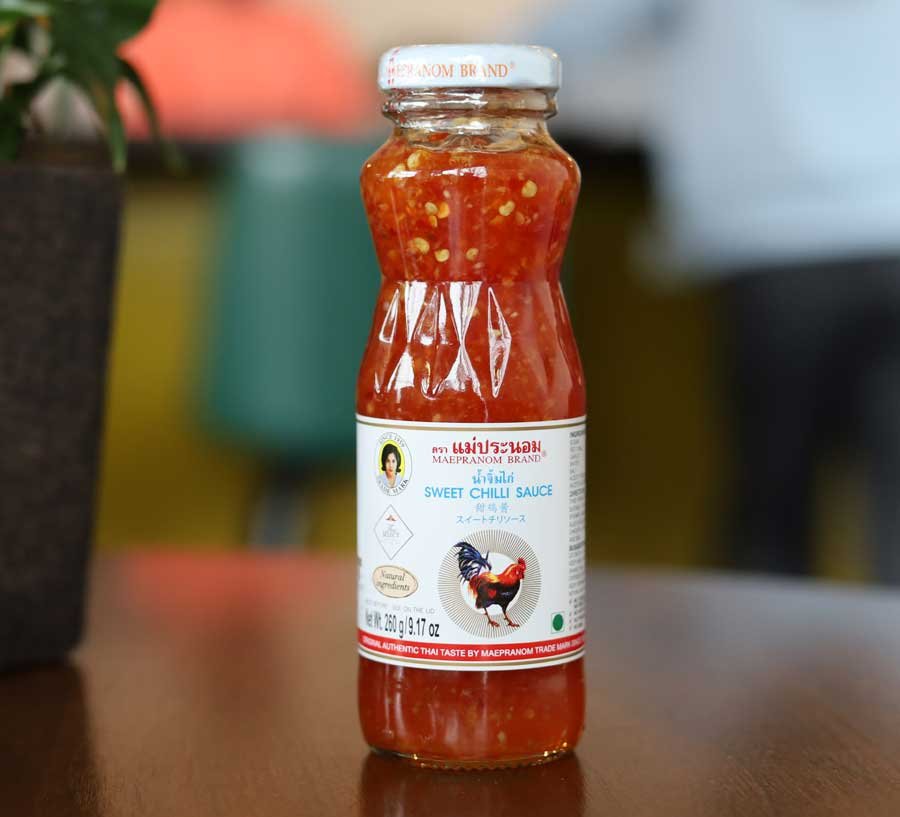
One of the most famous pioneers of this movement was Mae Pranom, founded in Bangkok in 1959 by Pranom and Sirichai Daengsupha. Initially known for artisanal chili pastes, Mae Pranom introduced bottled Nam Chim Kai featuring its now-iconic portrait label. Because the sauce tasted remarkably close to homemade street-stall versions and kept effortlessly in the pantry, it quickly became a beloved household staple across Thailand. Other heritage Thai food producers—including Pantai Norasingh and Cock Brand—soon followed, turning Nam Chim Kai into one of Thailand’s most recognizable pantry exports.
Riding the Global Thai Restaurant Boom
The real international breakout of Nam Chim Kai began in the 1980s and 1990s alongside the rapid global expansion of Thai restaurants. As Thai cuisine surged in popularity across North America, Europe, and Australia, later supported by Thailand’s celebrated “Kitchen of the World” culinary diplomacy initiative, diners fell instantly in love with starter platters of fried spring rolls (Poh Pia Tod), crispy tofu, and chicken satay.
Right in the center of almost every appetizer plate sat a small ceramic bowl of Nam Chim Kai. For western diners who were still building their tolerance for fiery green curries or extra-spicy papaya salad, sweet chili sauce served as the ultimate welcoming ambassador. Its approachable sweetness felt familiar, while its bright vinegar tang and gentle chili warmth introduced an exciting new flavor profile that diners wanted to recreate at home.
Crossing From Asian Markets to Every Mainstream Aisle
At first, home cooks outside Thailand had to hunt down bottles of Nam Chim Kai in specialty Asian grocery stores in Chinatowns or urban centers. By the 2000s, however, mainstream supermarkets noticed that shoppers were buying Thai sweet chili sauce by the case.
Once major grocery chains placed bottles of Nam Chim Kai directly into standard condiment aisles next to ketchup, mustard, and hot sauce, the sauce officially crossed over into everyday global cooking. Chefs and home cooks began experimenting far beyond traditional Thai dishes—brushing it onto ribs, tossing it with roasted Brussels sprouts, mixing it with cream cheese for party dips, and serving it alongside fish and chips.
Today, major western food corporations produce their own versions of sweet chili sauce, while authentic Thai-made bottles exported directly from Bangkok continue to dominate pantry shelves across dozens of countries.
A Drop of Thai Culinary Genius in Every Bite
What makes the global journey of Nam Chim Kai so special is that it never had to compromise its soul to win over the world. Even when drizzled onto pub fries in London or glazed onto backyard chicken wings in New Jersey, it still carries Thailand’s foundational philosophy of flavor balance—bringing sweet, sour, salty, and spicy together in effortless harmony.
The next time you reach for that familiar bottle of sweet chili sauce in your fridge, take a second to appreciate its journey: a humble dipping sauce born beside a smoky Thai chicken grill that quietly became one of the world’s favorite everyday flavors.