For decades, Asian performers trying to break into the American entertainment mainstream faced an unspoken bargain: you could visit, you could be treated as a fascinating novelty, and you could stay inside a narrowly defined genre box, but you rarely got to own the building. In 2026, Lisa, born Lalisa Manobal in Buriram, Thailand, spent the year systematically dismantling that old glass ceiling in plain sight.
Across a whirlwind twelve months, the Thai superstar won major American music awards outside any “regional” sub-category, dropped a movie-inspired solo EP woven with unmistakable Thai cultural pride, debuted a theatrical documentary at the Toronto International Film Festival, stepped into big-screen action cinema, and made history on the Las Vegas Strip with VIVA LA LISA at The Colosseum at Caesars Palace. To casual observers, it looks like an impressive trophy haul. To anyone watching the global entertainment industry closely, Lisa’s 2026 run represents a structural shift in how Asian artists operate, negotiate, and claim space on the world stage.

Winning in America Without the “Category Box”
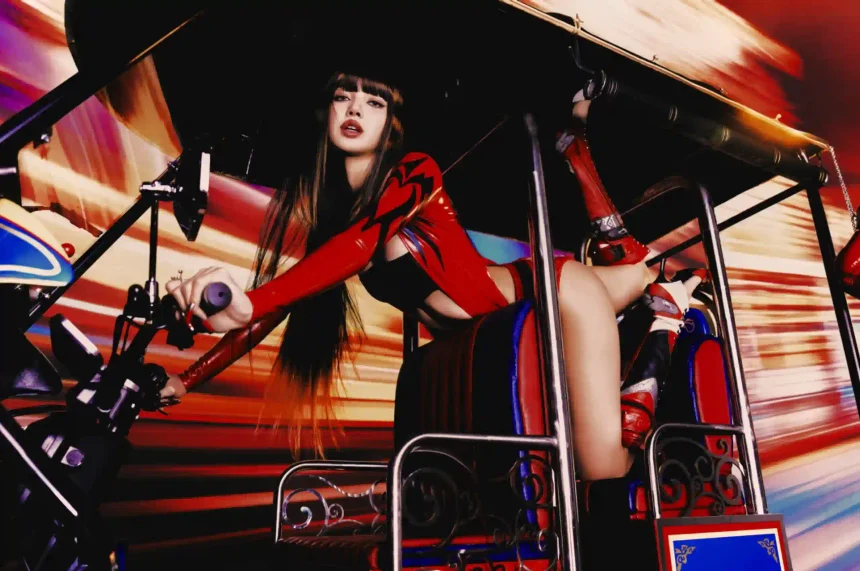
For years, Western awards shows handled the global rise of Asian music by creating separate lanes, handing out “Best K-Pop” or “International” trophies while keeping the main pop, rock, and general-field categories largely reserved for Western acts. Lisa shattered that barrier at the 2026 MTV Video Music Awards. Not only did she take the stage to perform her Bangkok-filmed hit “SaWaDiKa” complete with martial-arts-inspired choreography and a moving tuk-tuk, she walked away with the Best Pop award for “Dream” (featuring Japanese actor Kentaro Sakaguchi), becoming the first solo K-pop artist in history to win that flagship mainstream category.
Winning Best Pop instead of being tucked into a niche international bracket sends an unmistakable message across the music business: Asian artists are no longer guests at the edge of global pop culture. They are competing head-to-head in the center of the arena… and winning.
Claiming the Las Vegas Strip on Her Own Terms
If winning a major American pop award proves you have mainstream reach, landing a Las Vegas residency proves something even rarer: staying power. Traditionally, a headlining residency at a landmark venue like The Colosseum at Caesars Palace has been treated as an American pop culture coronation, a stage associated with towering icons like Celine Dion, Elton John, and Adele. When Lisa announced VIVA LA LISA for November 2026, she became the first K-pop star in history to headline a Las Vegas residency. Tickets for her initial four dates sold out in ten minutes flat, prompting Caesars Palace to add two extra performances due to overwhelming demand.
What makes that milestone so significant for Asian performers is the format itself. Touring arenas around the world proves you have a dedicated fanbase willing to buy tickets when you pass through town. A Las Vegas residency flips the gravity: audiences from across North America, Asia, and Europe fly to you for a custom-built theatrical production. It establishes an Asian soloist as a permanent, bankable live-entertainment institution in the heart of American show business.
PRESS PLAY and Putting Thailand Front and Center
Perhaps the most inspiring part of Lisa’s 2026 evolution is that she never watered down her Thai identity to fit American expectations. In fact, she turned the volume up.
After launching her independent management company LLOUD Co. and signing a global partnership with RCA Records that gave her ownership of her master recordings, Lisa gained the creative freedom to build projects around her own instincts. That independence came into full focus in October 2026 with the release of her six-track EP PRESS PLAY. Conceived like a feature film where every song introduces a distinct character, PRESS PLAY paired high-octane, cinema-inspired singles like “Tarantino” with “SaWaDiKa” a track named directly after the everyday Thai greeting. Filmed in Bangkok, the “SaWaDiKa” video pulled in more than 70.8 million YouTube views in its first 24 hours and debuted at number 69 on the Billboard Hot 100, giving Lisa her highest solo entry on the chart at the time.
At the same time, she expanded her footprint in film and television, following her acclaimed acting debut in Season 3 of HBO’s The White Lotus by stepping into major action cinema with TYGO, a new chapter in Netflix’s Extraction universe, while chronicling her solo journey in Sue Kim’s documentary Always Lalisa.
What Lisa’s Blueprint Means for the Next Generation of Asian Artists
For young singers, dancers, and actors growing up in Bangkok, Seoul, Manila, or Jakarta, Lisa’s 2026 milestones change what feels possible.
First, she proved the power of creative ownership. By building LLOUD rather than remaining solely inside a traditional entertainment contract, Lisa demonstrated that Asian artists can sit at the executive table, own their masters, and negotiate global partnerships as peers rather than employees.
Second, she proved that cultural specificity is a strength, not a hurdle. From bringing a tuk-tuk onto the VMA stage to naming a Billboard-charting single after a Thai greeting, Lisa showed that global audiences respond to authenticity. You do not have to erase where you come from to command a marquee on the Las Vegas Strip.
Most of all, Lisa turned a solo career into a wider doorway. Every sold-out night at Caesars Palace, every mainstream trophy, and every global streaming record forces Western studios, promoters, and festival bookers to look closer at Southeast Asia and East Asia, making it just a little easier for the next wave of Thai and Asian artists to walk through that same door without asking permission.