

If you spend any time watching combat sports clips online, chances are you have run into a smaller Thai man smiling in the middle of a ring, slipping a heavy punch by a fraction of an inch, and suddenly dropping a hand to the canvas to whip a cartwheel kick straight across his opponent’s jaw. To anyone new to Muay Thai, that looks like flashy stunt work or a lucky trick out of a video game. To anyone who follows the sport, that is simply Saenchai being Saenchai.
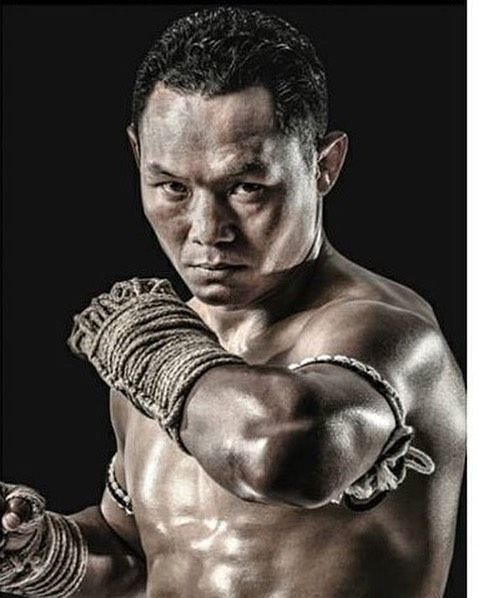
His birth name is Suphachai Saenpong, born on July 30, 1980, in Maha Sarakham province in Thailand’s northeast region of Isan. Over more than thirty years in the ring, he built a competitive record and a reputation that puts him right at the top of the conversation for the greatest pound-for-pound fighter to ever lace up gloves. Most casual fans know him from viral highlight reels of crazy foot sweeps, matrix-style head movement, and that signature cartwheel kick, but those highlight clips only show a fraction of the picture. Behind the grin, the relaxed swagger, and the pinpoint balance is a fighter who spent his prime grinding through the absolute toughest eras of Bangkok stadium boxing, beating generations of champions while regularly giving away weight advantages just so promoters could find opponents willing to step into the ring with him.
Getting to the heart of who Saenchai is means understanding how Muay Thai works from the grassroots level up, watching how a skinny kid fighting for thirty baht in a dusty village grew a fight IQ so sharp that the hardest hitters in the world could rarely land a clean glove on him.
The Red Dust of Isan
The story begins in Maha Sarakham, a quiet farming province where life revolves around seasonal rice harvests. In Isan, Muay Thai is part of everyday survival. For countless young boys from working-class families, stepping into the ring is not a weekend hobby or an after-school sport. It is a respected, honest way to put food on the family table, build personal discipline, and create a future outside of grueling farm labor.
When Saenchai was eight years old, he watched a friend’s older brother come home with a cash prize after winning a local fight. That small wad of cash grabbed his attention, and he decided on the spot that he wanted to learn the art of eight limbs.
He walked into a nearby gym and picked up the fundamentals right away. After just a single week of formal pad work, the trainers entered him in his first real bout. He fought smart, took home a decision win, and earned thirty baht, which worked out to roughly a single dollar back then. It was pocket change, but to an eight-year-old in the countryside, it felt like a jackpot. More than the money, it sparked a competitive drive that never faded.
Saenchai spent the next few years fighting constantly across temple fairs and small provincial shows, stacking up dozens of fights before he even became a teenager. In Thailand, that kind of relentless schedule is completely normal for promising prospects. Fighters do not sit around for three or four months preparing for a single opponent. They fight on a Saturday, rest for a couple of days, get back to hitting pads, and fight again the following weekend. By the time Saenchai turned fourteen, his razor-sharp technique and natural timing caught the eyes of talent scouts from Bangkok. Moving to the capital is the ultimate test for any Thai boxer, because Bangkok is home to Lumpinee and Rajadamnern stadiums, the two historic proving grounds where the best fighters on earth collide.
He landed at the gym run by Somluck Kamsing, an Olympic gold medalist in western boxing and a national hero in Thailand. Somluck immediately spotted something special in the young southpaw and paid a significant 300,000-baht transfer fee to buy out his contract. Keeping with the long Thai tradition of fighting under the gym’s banner, the teenager stepped into Bangkok’s brightest lights as Saenchai Sor. Kingstar and Saenchai Sor. Khamsing.
Conquering the Bangkok Meat Grinder
The stadium scene in Bangkok during the late 1990s was brutal. The divisions were stacked with killers, the pace was relentless, and the crowds in the stands were packed with passionate gamblers shouting on every exchange. Most stadium stars made their names through raw toughness, marching forward under heavy fire to land bone-breaking body kicks, crushing knees in the clinch, and vicious elbows.
Saenchai took a completely different path. While everyone else relied on brute force and endurance, Saenchai fought with pure geometry and timing. He was the ultimate Muay Femur, a technical wizard who relied on ring vision, distance control, slick footwork, and counters that made opponents look foolish.
The wins piled up fast. In 1997, at just sixteen years old, Saenchai won his first Lumpinee Stadium belt at super flyweight (115 pounds). Two years later, at eighteen, he moved up in weight and captured the Lumpinee bantamweight title at 118 pounds. By 1999, the Sports Writers Association of Thailand recognized that they were watching a generational talent and named him their Fighter of the Year.
Even after conquering the stadiums, Saenchai stayed curious about testing his hands in other disciplines. In 2002, he tried his luck in professional western boxing, competing under his birth name, Suphachai Saenpong. His head movement, tricky footwork, and snappy southpaw jab worked just as well in the boxing ring. In late 2003, he took on Rud 4K Kevkatchewon of the Philippines for the interim PABA featherweight title and walked away with a clean, unanimous decision victory. He defended the belt early the next year and walked away from professional boxing with a spotless 5-0 record, deciding his heart was always with the full eight limbs of Muay Thai.
When he returned to the stadiums full-time, he entered the golden era of modern Muay Thai. Over the course of the 2000s, Saenchai stood toe-to-toe with a murderers’ row of legends: Singdam Kiatmuu9, Nong-O Gaiyanghadao, Kongsak Sitboonmee, Orono Wor Petchpun, Thongchai Tor Silachai, and Petchboonchu FA Group. His rivalry with Singdam became legendary; the two shared the ring around ten times, trading belts, bruises, and deep mutual respect across years of elite battles.
What made Saenchai’s stadium career legendary was how completely he cleared out his natural weight classes. By his mid-twenties, he had conquered super featherweight (130 pounds) and lightweight (135 pounds), winning Lumpinee championships across four different weight divisions. Because he was consistently outpointing the best fighters Thailand had to offer, stadium matchmakers ran into a serious dilemma: nobody left could give him a competitive fight on equal footing.
The Weight Handicaps and The Two-on-One Legend
To keep the betting markets balanced and give his rivals a fighting chance, promoters began saddling Saenchai with deliberate weight handicaps. Saenchai would weigh in at 130 pounds, while his opponent was allowed to step onto the scale at 132, 134, or even 135 pounds. In a sport where two or three pounds of rehydrated muscle completely alters punch resistance and clinch leverage, giving up weight to elite stadium champions is almost unheard of.
Saenchai accepted it as routine business. Between 2003 and 2014, when fighting at equal weights against fellow Thai fighters, Saenchai lost only twice. Every other loss on his stadium record during that eleven-year stretch came against opponents who held a clear weight advantage on fight night.
Promoters even went beyond simple weight advantages. In July 2009 at Lumpinee Stadium, they put together one of the most famous handicap fights in combat sports history. Saenchai agreed to take on two different elite champions across a single five-round bout.
For the first three rounds, he faced Petchboonchu FA Group, widely considered the most smothering, dangerous clinch-and-knee specialist in Thailand. Saenchai used slick balance and lateral movement to neutralize Petchboonchu’s clinch, tripping him and dumping him onto the canvas over and over. Then, for the fourth and fifth rounds, when any normal athlete would be gasping for air, a fresh, hard-hitting champion named Sagetdao Petpayathai jumped into the ring to take over. Saenchai calmly caught his breath, stayed on his toes, picked Sagetdao apart with push kicks and counter lefts, and walked away with a unanimous decision victory over both men on a single scorecard. It stands as one of the most remarkable displays of fight IQ ever seen in a boxing ring.
Around that period, wanting to see the world and introduce his style to international audiences, Saenchai parted ways with the Kamsing camp over booking freedom. Kingstar stepped in, settled the contract, and backed his move onto foreign stages. Over time, he became the global flagship fighter for PK.Saenchaimuaythaigym and partnered closely with YOKKAO as an international brand ambassador.
Taking the Show Global: Thai Fight and Beyond
Stepping onto the world stage started an entirely fresh chapter in his life. Throughout the 2010s, kickboxing and Muay Thai promotions across Europe, the Americas, and Asia competed to put Saenchai on their cards. Western fans who had only seen grainy video rips of Lumpinee bouts on YouTube finally got the chance to watch the maestro work in person.
He faced top international kickboxers and Muay Thai standouts like Liam Harrison, Damien Alamos, Tetsuya Yamato, and Andrei Kulebin. Liam Harrison, the hard-punching British standout who shared the ring with Saenchai three times, famously described fighting him as trying to hit a ghost that laughs back at you. In France, when Saenchai took on French champion Fabio Pinca, Pinca held a massive size advantage on fight night. Yet against bigger, younger foreign champions, Saenchai’s timing, defense, and calm under fire kept him virtually untouchable.
A major driver of his international run was his long partnership with the Thai Fight promotion. Starting in 2014, Saenchai became the undisputed headliner of Thai Fight, leading cards across Thailand and worldwide. The promotion regularly showcased Kard Chuek rules, where fighters traded standard boxing gloves for traditional bound hemp ropes. Taking punches and elbows through thin rope wraps is terrifying business, where a single miscalculation can break a jaw or open a massive cut. Yet across dozens of appearances under the Thai Fight lights, Saenchai never dropped a single bout, winning multiple King’s Cup tournament trophies and going completely undefeated with the promotion.
The Playbook: Breaking Down the Magic
Watching Saenchai work in the ring is a masterclass in staying relaxed while staying lethal. Where most fighters get tense from adrenaline, Saenchai looks like he is playing a casual game of pickup soccer.
His stance is classic southpaw, but his weight is always shifting. One second he sits deep on his back hip with his front foot barely touching the canvas, ready to fire a lightning-fast teep (push kick) straight into an opponent’s solar plexus. The next second, he skips off to the side, creates an unexpected angle, and whips a left high kick from a spot that seems impossible to defend.
His defensive footwork is on another level. Most traditional Thai fighters don’t mind taking a hard low kick as long as they can trade back with a harder kick of their own. Saenchai hates getting hit. He slips punches by millimeters, dips his head, rolls his shoulders, and pulls his lead leg clean out of danger when opponents swing for his thigh, leaving them kicking empty air and spinning out of balance.
Then there is his sweep game. Catching an opponent’s kick is a basic drill, but Saenchai turned the counter-sweep into high art. He traps the shin against his ribs, takes a quick pivot step, and cuts the back of the opponent’s standing leg with his heel or forearm. His opponents do not just slip; they get launched into the air and slam flat on their backs, a humiliating move that drains the confidence out of aggressive brawlers.
And of course, there is the cartwheel kick. Drawn straight out of ancient Siamese battlefield arts (Muay Boran), the move involves placing one hand down on the canvas, dipping the head low, and whipping the back leg in a high, vertical arc over the top. Because Muay Thai rules do not allow a fighter to be struck while three points of contact touch the floor, putting a hand down gives him a split second of built-in defensive cover while his heel comes crashing down over the guard. Every time he pulls it off, the venue roars. It shows the sheer fun he brings into a ring: incredibly dangerous, yet pure entertainment.
Life Outside the Ropes
Behind the ferocious competition schedule, Saenchai has built a steady, grounded personal life. He is married to his longtime wife, Deena, and together they have raised a tight-knit family in Bangkok. While many combat sports athletes run into trouble with fast money and city nightlife, Saenchai has always stayed remarkably disciplined. He loves playing casual soccer on his days off, laughs easily with his gym mates, and treats young up-and-coming fighters with genuine care and patience.
Over the last decade, he stepped naturally into the role of Muay Thai’s favorite global ambassador. Traveling across continents with YOKKAO, he leads sold-out training seminars where thousands of everyday martial artists gather to learn his footwork and timing drills. Watching him teach is a joy. He doesn’t tell people to punch harder or swing wilder; he teaches them how to breathe, how to watch an opponent’s shoulders, how to smile when the pace picks up, and how to treat your training partners with real respect.
Even well into his forties, when nearly every other legend of his generation was long retired, Saenchai kept putting on a show. In late 2023, he took part in a special bare-knuckle Muay Thai showdown with fellow icon Buakaw Banchamek. Sharing the ring with another living giant of Thai sports, he showed that his hands, his reflexes, and his love for the sport had not lost a step. In 2026, Rajadamnern Stadium officially inducted him into their Hall of Fame, cementing his status as an all-time legend of the sport.
With over 350 professional fights and more than 300 victories across stadiums, world titles, and international promotions, Suphachai Saenpong built a legacy that will almost certainly never be matched. He proved to the world that combat does not have to be fueled by hate or brute power. In the hands of a master, fighting can be an art, a game of high-speed chess, and a celebration of human skill. That is why fight fans all over the world still search his name, study his clips, and shake their heads in awe at the genius from Maha Sarakham.
