In Thailand, nobody asks if ghosts exist; they just ask what flavor of strawberry Fanta the neighborhood spirit house prefers today.
Between the sacred amulets dangling from every taxi rearview mirror, sacred trees wrapped in shimmering lengths of three-colored silk, and monks blessing commercial bank ATMs, the invisible plane isn’t an anomaly. It’s an active tenant. Animism, Khmer sorcery (saiyasart), and Theravada Buddhism have spent centuries cross-pollinating into an expansive supernatural ecosystem where the dead don’t just lurk in the shadows, they negotiate real estate, look for snacks, pick winning lottery numbers, and hold generational grudges.
If these entities had to navigate the modern horrors of dating apps, swiping right would be an absolute minefield of floating internal organs, 60-foot vertical standards, and unhinged domestic loyalty.
Here is what happens when you drag Thailand’s most iconic folklore onto the swipe screen.
1. Mae Nak Phra Khanong
Handle: @TillDeathDoUsPart_1860
Location: Phra Khanong canal banks / Wat Mahabut, Bangkok
Vibe: Monogamous to a fault; will literally cross the veil of death to make sure you have dinner ready.
Bio:
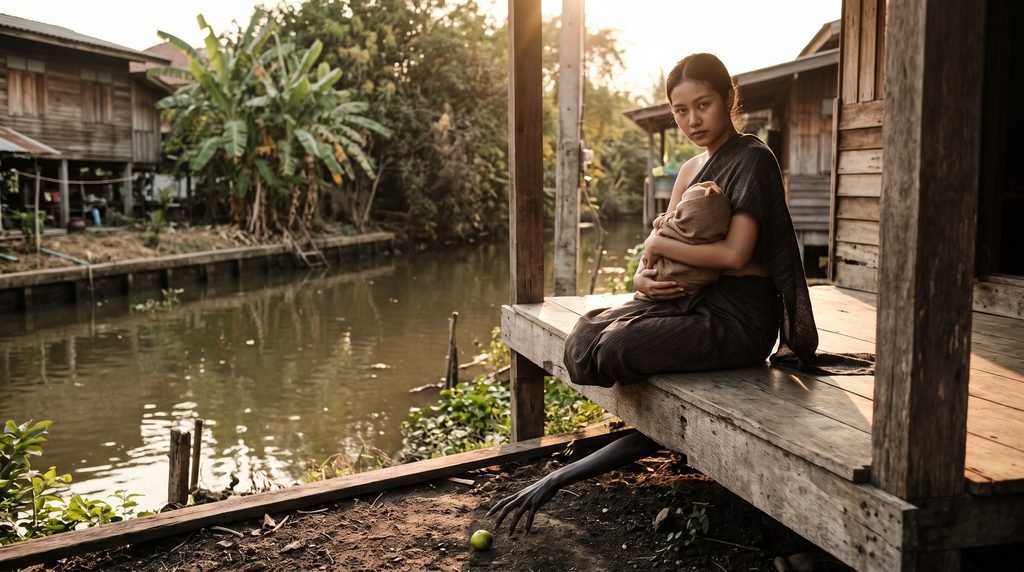
Looking for a ride-or-die who values loyalty above all else. If you get conscripted to the northern frontier, don’t worry, I will literally stand on the pier holding our baby every single dusk until you row home. People say I’m a little intense, but when I commit, I commit across multiple reincarnations. Love home-cooked dinners, rocking the hammock, and quiet nights by the water. If a lime rolls through a hole in the floorboards down into the mud under the stilt house, don’t bother climbing down the stairs; I’ve got enough reach to snag it from up here. Just do me a favor: ignore the market aunties gossiping about my pulse.
- Love Language: Acts of service, complete domestic devotion, terrorizing meddlesome neighbors.
- Dealbreakers: Exorcists, sacred white cotton threads (sai sin), and anyone who gets squeamish about minor decomposition.
The Cultural Dossier:
Mae Nak is the undisputed queen of Thai folklore. Rooted in mid-nineteenth-century Bangkok when Phra Khanong was wild orchard and swamp country, her story reflects the terrifying reality of maternal mortality in pre-modern Southeast Asia. Dying during childbirth (tai hong) produced the most feared, volatile category of ghost: Phi Tai Thang Klom. Yet, Thai culture did something remarkable: instead of treating Nak purely as a monster, society transformed her into an icon of eternal marital devotion (rak thae). Today, her shrine at Wat Mahabut is flooded daily with men pulling military draft lottery slips (praying to draw a black card exempting them from service, honoring Nak’s heartbreak when Mak was taken to war) and hopeful gamblers rubbing tree bark for lottery numbers.
2. Phi Krasue
Handle: @GlowingFromWithin
Location: Rural rice paddies, village fence lines, livestock pens
Vibe: Low-maintenance packer; travels without any baggage (or a torso).
Bio:
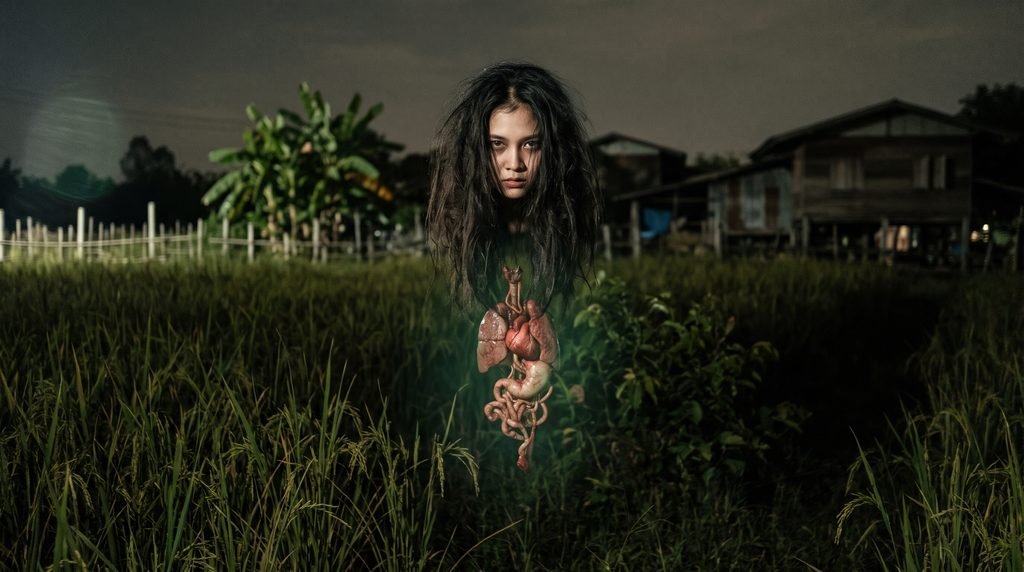
Shy village girl by day; free-floating, luminous spirit after 2:00 AM. Swipe right if you appreciate someone who travels light. I literally leave my entire lower half stashed under the bed frame before heading out for the evening. Passionate about night flights, zero-waste living, and fresh, iron-rich sustenance across the sub-district. I have a warm, greenish-red bioluminescence that saves on electric bills. If you see laundry hanging on your back porch line, just don’t freak out if I borrow an old sarong to wipe my chin after a midnight snack.
- First Date Idea: A breezy midnight float above the banana groves, illuminated entirely by my digestive tract.
- Dealbreakers: Thorny brambles, bamboo fish traps, and households that actually remember to bring their drying clothes inside before sundown.
The Cultural Dossier:
Southeast Asia’s most visually arresting entity (shared as Kasu in Cambodia and Penanggalan in Malaysia), the Krasue represents an ancient karmic curse passed down through dark magic or tainted saliva. Sociologically, Krasue served as an essential agrarian mechanism for hygiene, postpartum safety, and moral control. Before refrigeration, mysterious livestock deaths and rotting animal entrails needed an explanation. The lore trained rural families to bury placenta deep beneath the dirt, surround maternity bedrooms with sharp thorns to snag floating organs, and bring drying fabrics indoors to prevent contamination. It also functioned as a social warning to non-conforming women who lived outside communal eyes: deviate too far from village expectations, and the neighborhood might brand you a late-night flying head.
3. Phi Krahang
Handle: @UpcycledAviation
Location: Rice paddies, barn roofs, open village skies
Vibe: Shirtless year-round; built entirely out of manual labor and kitchenware.
Bio:
They said a guy couldn’t fly using basic kitchen implements and a dream, and I took that personally. Athletic build, deeply connected to traditional farming tools. My weekend cardio involves strapping two woven bamboo rice-winnowing trays (kradong) to my forearms, mounting a heavy wooden rice pestle like an aerial surfboard, and cruising low over the tree canopy. Looking for someone grounded to balance out my low-altitude lifestyle. If you hear a heavy rustling sound on your clay roof tiles around 3:00 AM, don’t grab a shotgun—just wave.
- Unique Skill: Zero carbon footprint; absolute upper-body strength.
- Dealbreakers: High-voltage power lines, modern electric rice mills, and people who look down on honest agricultural implements.
The Cultural Dossier:
The male counterpart to Phi Krasue, Krahang is the cautionary tale of the sorcerer who didn’t respect his own craft. Legends describe him as an arrogant practitioner of saiyasart who broke ritual purifications and was cursed to become a feral night flyer. What makes Krahang uniquely fascinating is his aggressively agrarian toolkit: his wings are the round bamboo baskets rural women used to winnow rice husks, and his steering rig is the heavy wooden mortar pestle found in every Central Plains farmhouse. He personifies the danger of spiritual arrogance—a warning that violating moral boundaries reduces a proud village craftsman into a nocturnal scavenger.
4. Nang Tani
Handle: @WildBananaBabe
Location: That shadowy, overgrown banana grove at the edge of town
Vibe: Cottagecore enchantress with zero tolerance for environmental vandalism.
Bio:
Nature girl at heart. Soft green complexion, long glossy black hair, dressed exclusively in traditional emerald silk sabai that blends into the leaves. I inhabit the wild, seeded Musa balbisiana (Kluai Tani) banana trees. I’m gentle, sweet-tempered, and known to bring massive financial luck to polite men who treat my grove with respect. If you carve sweet poetry into my tree trunk or bring me fragrant jasmine garlands, I might step out of the foliage into your dreams tonight for a quiet conversation. Just treat me right—infidelity or swinging an axe into my home will unleash a wrath you will not survive.
- Favorite Aesthetic: Deep emerald hues, morning dew on massive leaves, sweet unpeeled fruit.
- Dealbreakers: Chainsaws, property developers clearing brush without prayers, and men who treat wild groves like an open-air urinal.
The Cultural Dossier:
Nang Tani belongs to the revered class of tree spirits (Nang Mai). Unlike the edible Cavendish or finger bananas cultivated for food, the Kluai Tani variety produces hard, unpalatable, seed-filled fruit and spreads aggressively. Because these groves were useless for fruit harvesting, they formed dense, shadowy green pockets on the borders of villages. Tani served as a brilliant indigenous conservation tool: taboos strictly forbade clearing flowering Tani trees without consulting elders and performing elaborate propitiation rites (phithi buang suang). Rural men were warned never to relieve themselves near wild banana clumps under threat of spectral seduction and madness. To this day, villagers tie strips of three-colored silk (pha sam si) around old Tani trunks, establishing sacred botanical boundaries that double as wildlife micro-sanctuaries.
5. Nang Ta-khian
Handle: @CenturyOldHardwood
Location: Ancient Hopea odorata trees, racing longboats, temple pavilions
Vibe: Pure matriarchal power; do not even speak to her without offering fresh silk first.
Bio:
I don’t leave my trunk for just anyone. I inhabit massive, three-hundred-year-old ironwood trees deep in the primary forest. Regal, commanding, wrapped in vintage silks, and holding down immense primordial authority. Treat me with reverence, and I will make your household prosperous and bless your village with the fastest racing dugout on the river. But if an arrogant logger drives an axe into my trunk without formal ceremonies, his entire family line will face immediate spiritual ruin. I know my value; my grain doesn’t rot, warp, or compromise.
- Dream Date: Rubbing fine baby powder onto my smooth timber bark under the full moon until winning lottery numbers appear.
- Dealbreakers: Illegal timber operations, cheap polyester fabrics, and failing to ask for formal permission before clearing timber.
The Cultural Dossier:
Nang Ta-khian is an elemental heavyweight in Thai animism. The Hopea odorata (Ta-khian) is an exceptionally dense, water-resistant hardwood tree that formed the backbone of Siamese maritime history. These massive trunks were felled to carve single-piece royal barges, community racing longboats (ruea yao), and the primary structural pillars (sao ek) of monasteries. Because felling a massive hardwood was perilous work that forever altered the forest canopy, animist doctrine required formal negotiations with the resident spirit. Monks and shamans held elaborate rituals to invite Ta-khian to peacefully transfer her home into the finished vessel or temple pillar. Today, waterlogged logs dredged from riverbeds are enshrined at local wats, where crowds gather with talcum powder to divine lottery numbers—a vivid example of ancient animism driving modern speculative dreams.
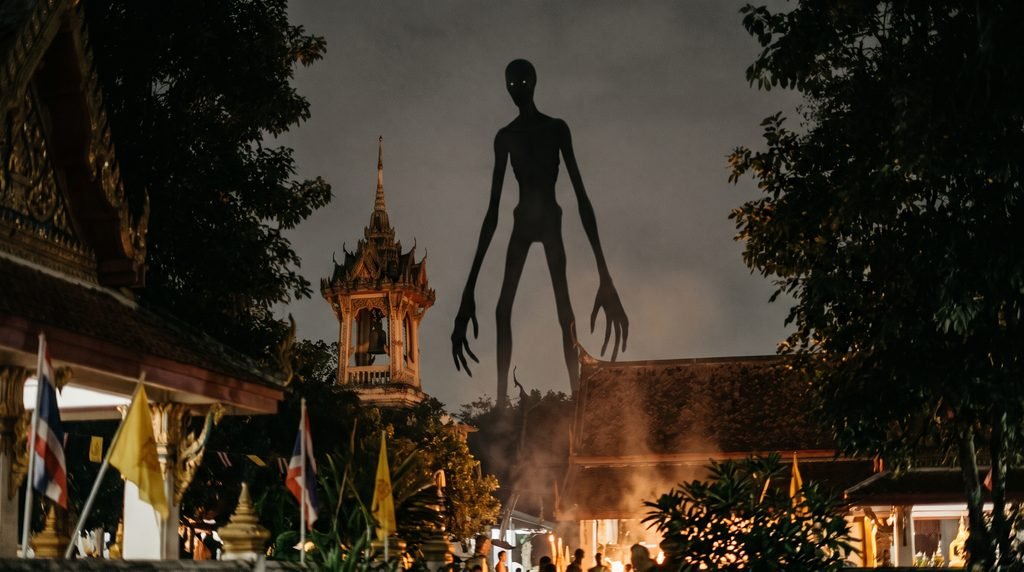
6. Phi Pret
Handle: @HighStandards_60Ft
Location: Temple boundary walls, remote cremation grounds, crossroads
Vibe: Literal skyscraper; eternally starving; deeply remorseful about past behavior.
Bio:
Standing sixty feet tall. Extremely lean build—think swaying sugar palm tree in a monsoon. If you like someone tall, dark, and carrying generations of karmic debt, look no further. My hands are swollen to the size of woven palm fronds, but my mouth is literally the size of a sewing needle’s eye, which makes dinner reservations an absolute nightmare. I spend my nights pacing temple perimeter walls, whistling shrilly into the dark, and wishing I had listened to my mother. Not looking for hookups; looking for someone compassionate enough to donate sticky rice and saffron robes to monks on my behalf so my karmic sentence gets reduced.
- Height: As tall as the temple bell tower.
- Dealbreakers: Talking back to your parents, striking elders, cheating temples, or failing to dedicate merit (kruat nam) after almsgiving.
The Cultural Dossier:
Derived from the Sanskrit Preta, the Pret is Theravada Buddhism’s most graphic visual metaphor for retributive justice (kamma). Those who spend their human lives consumed by greed, hoarding, verbal malice, or physical violence against parents are reborn into the hungry ghost realm (Peta loka). The Pret’s anatomy directly illustrates their moral crimes: hands the size of palm fronds reflect the heavy hands that struck elders or hoarded wealth; a mouth the size of a needle eye represents the agonizing inability to consume sustenance, matching the sins of gluttony and spite. During the annual Sat Thai (Festival of the Tenth Lunar Month) in Southern Thailand, entire communities gather to dedicate feasts of traditional sweets to appease these suffering ancestors, using the folklore to drill filial piety and generosity into young generations.
7. Phi Kong Koi
Handle: @OneFootWonder
Location: Limestone crags, jungle caves, dense Isan wilderness
Vibe: Diminutive outdoorsman with an intense, non-negotiable foot fixation.
Bio:
Low-profile forest creature with a very specific gait. Small, covered in coarse fur, sporting a single backward-facing foot, and I get around by hopping rhythmically while chanting my own name: “Kong koi! Kong koi!” If you love minimalist wilderness camping, we’ll click instantly. I’m a creature of simple tastes. When you’re asleep in your jungle hammock around the dying campfire, I like to sneak under the canvas and gently nibble on your big toe. Don’t worry about hiking gear—I travel light.
- Favorite Music: Rhythmic single-leg hopping echoes bouncing off limestone ravines.
- Dealbreakers: Campers who sleep in a circle with their feet tucked in toward the fire, heavy combat boots, and forest fires.
The Cultural Dossier:
Hailing from the dense, mountainous borderlands of Northeast Thailand (Isan) and Laos, Phi Kong Koi addresses the real survival perils of remote jungle expeditions. Hunters and foresters were strictly warned never to sleep with their feet sticking out past the defensive perimeter of the camp. To ward off the toe-sucking sprite, woodsmen developed the life-saving custom of sleeping in a tight star formation: heads pointed outward to watch for predators, with feet tucked together safely inside the warm circle of central campfire ashes. Kong Koi transformed vital survival disciplines—preventing snakebites, avoiding frostbite, and maintaining group fire watches—into an unforgettable cautionary tale.
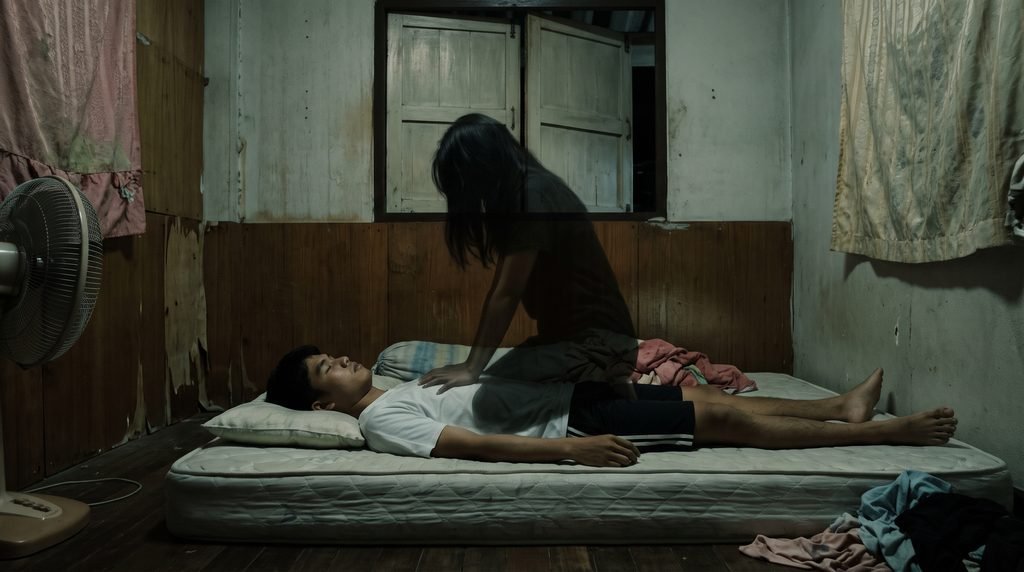
8. Phi Am
Handle: @HeavyPressureEveryNight
Location: Directly on your sternum, master bedrooms everywhere
Vibe: Suffocating, intense, and refuses to respect personal space.
Bio:
Heavy, commanding, and extremely hands-on. I don’t do subtle, when I show up, you’ll feel all of me. Specializing in late-night drop-ins around 3:30 AM right as you hit REM paralysis. I like to sit directly across your ribcage, pin your arms to the sheets, and watch you try to scream while your vocal cords make muffled squeaking noises. If you’re stressed out, exhausted, sleeping flat on your back, and haven’t had a sip of water all day, consider us an absolute lock.
- Best Asset: Unbelievable pressure application; completely immovable.
- Dealbreakers: People who sleep on their stomachs, bedside Buddha amulets, and healthy sleep hygiene.
The Cultural Dossier:
Phi Am is the classic Siamese cultural interpretation of sleep paralysis, a physiological glitch framed across the world as the Night Hag, the Japanese Kanashibari, or the Mexican Se te subió el muerto. In Thailand, Phi Am is traditionally cast as a shadowy female spirit that immobilizes male sleepers. This lore is intimately tied to Southeast Asian anxieties surrounding Sudden Unexpected Nocturnal Death Syndrome (SUNDS), locally known in Isan as Lai Tai (dying in one’s sleep). Historically, when young, healthy migrant workers died mysteriously in their beds, rural communities blamed predatory female spirits (Phi Mae Mai) stealing their life force. To ward them off, men would paint their fingernails red, sleep in sarongs, or hang wooden phallic amulets (palad khik) outside their doors to disguise their gender. Phi Am gave a terrifying biological mystery a recognizable face and a communal defense.
9. Phi Pop
Handle: @GutFeelingOnly
Location: Rural Isan villages, kitchen larders, giant earthenware water jars
Vibe: Complete spiritual absorption; when we date, I move into your body permanently.
Bio:
Looking for someone to share my innermost cravings. When I fall for someone, I don’t just stay the night; I crawl right into your ribcage and take over the controls. Known to hijack host bodies at sundown to raid neighborhood chicken coops, devour fresh intestines, and send the entire village committee running into the street. If you catch me staring blankly into the corner muttering about raw meat, don’t overthink it—I’m just hungry. Need a partner who won’t panic when the local shaman pulls out a consecrated wooden stick.
- Guilty Pleasure: Fresh raw offal (lap dip), unpasteurized blood soup, livestock viscera.
- Claim to Fame: Starring in dozens of horror-comedy movies, sprinting through dirt alleys chased by monks, and squeezing into impossibly small water jars (ong nam).
- Dealbreakers: Master monks, exorcism whips (wai setthi), sacred amulets, and boiled vegetables.
The Cultural Dossier:
Phi Pop is arguably the most socially potent spirit in modern rural Thailand. Unlike wandering ghosts, Pop is a possessing entity born from botched black magic or passed down through female lineages via dark heirlooms. Inside a host—historically an elderly woman—the Pop consumes the host’s organs from within, taking control at night to hunt for raw entrails. Anthropologically, Pop accusations functioned as a high-stakes village pressure valve. If an insular village faced unexplained livestock deaths, epidemics, or poor harvests, suspicion often landed on eccentric, isolated, or property-owning widows. Accusing someone of harboring Phi Pop was historically used to exile marginalized individuals from the community.
Yet Pop also underwent a brilliant pop-culture transformation. Through the long-running Baan Phi Pop cinematic franchise, the terrifying flesh-eater became a fixture of slapstick comedy. Audiences delighted in watching the frantic ghoul—iconically played by Natanee Sitthisaman—chase bumbling shamans, cowardly headmen, and village boys who routinely dove headfirst into clay water jars to hide. Phi Pop captures the ultimate genius of Thai horror: taking a legitimate, bone-deep rural dread and laughing directly into its face.
The Morning After
Reading through the spirit realm’s dating roster proves that Thai ghost lore has never been about arbitrary monsters jumping out of closets.
Ghosts in Thailand are neighbors in an expanded, multi-layered community. They reflect the real physical hazards of pre-modern life: maternal mortality, jungle predators, sleep disorders, sanitary containment, and social friction. Whether illuminated by the glow of a smartphone or flickering under an oil lamp beside an old canal, these spirits remain living cultural mirrors—reminding everyone that in Thailand, respect for the past, love for family, and a healthy dose of humor walk hand in hand with the things that go bump in the night.