
If you ask combat sports fans around the world to picture Muay Thai, one specific image almost always comes to mind. It is a bronze-skinned, ridiculously muscular Thai fighter marching forward without fear, ripping heavy roundhouse kicks into banana trees, and crushing world kickboxing champions under bright stadium spotlights. For millions of people across Asia, Europe, and the Americas, that man is Buakaw Banchamek.
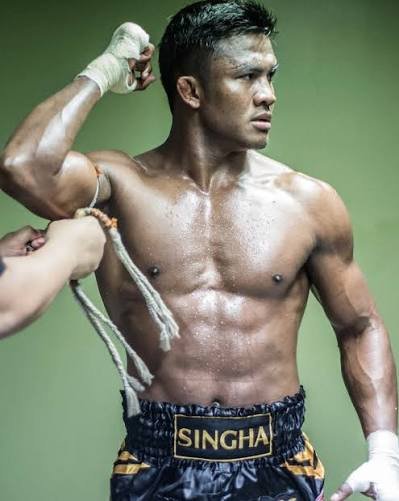
His real name is Sombat Banchamek, born on May 8, 1982, in the rural district of Samrong Thap within Surin province, located in the Isan region of northeastern Thailand. While seasoned ring purists often point to technical wizards like Saenchai or diesel-knee masters like Dieselnoi as the tactical pinnacles of the sport, Buakaw represents something entirely different. He is the ultimate crossover star, the cultural powerhouse who took an ancient, insular fighting style out of the smoky betting rings of Bangkok and turned it into a global phenomenon. Long before modern mixed martial arts or viral social media reels made Muay Thai a staple in mainstream western fitness gyms, Buakaw was single-handedly dismantling elite international kickboxers on primetime Japanese television, forcing rulemakers to change the laws of kickboxing just to slow him down.
Tracing the story of Buakaw means looking at the raw grit of Thailand’s agrarian heartland, understanding the harsh economic realities of the domestic fight circuit, and watching a young man evolve from an overlooked stadium grinder into an international pop culture titan and national icon.
The Red Dirt of Surin
Surin is a province steeped in unique cultural heritage, home to the Kuy people who are renowned across Thailand for their deep connection with wild elephants and their historic warrior traditions. Growing up in a modest farming household, young Sombat was surrounded by the daily routines of rice farming, heavy physical labor, and local festival celebrations. Like many rural villages in Isan, the local temple fairs always featured open-air Muay Thai rings set up on dusty patches of dirt, where young boys and seasoned veterans fought in front of roaring crowds for small envelopes of cash.
When Sombat was around seven or eight years old, he attended one of these temple fairs and watched the older neighborhood boys climb through the ropes. The noise of the crowd, the live wailing music of the sarama band, and the raw respect given to the winners hooked him instantly. He wanted to test himself, and he wanted to bring money home to help his parents.
Without any fancy equipment, running shoes, or formal gym memberships, he began mimicking the kicks and punches he saw at the fairs, kicking old tires tied to trees and running along dirt village roads in the morning heat. He joined a small local gym named Por. Pramuk in his home area, taking his first fight at eight years old. Like so many Isan prospects before him, he won his debut, earned a tiny purse of just a few dozen baht, and instantly realized that the ring was his ticket to a bigger life.
During his formative childhood years, Sombat competed relentlessly across northeastern Thailand. He piled up dozens of fights, learning how to absorb body blows, how to cut weight on humid afternoons, and how to deal with the intense mental pressure of fighting in front of local gamblers whose wallets depended on his performance. By the time he reached fifteen, his physical power and natural athletic frame caught the attention of the Por. Pramuk gym’s main headquarters in Chachoengsao province, just east of Bangkok.
Moving to the central camp meant leaving his home province behind and dedicating every waking hour to the grueling routine of professional Muay Thai. Following the time-honored tradition of taking his gym’s name into the ring, the young prospect was given the fight name Buakaw Por. Pramuk. “Buakaw” translates to “White Lotus” in Thai, a name that evokes purity, resilience, and beauty emerging from murky waters.
The daily routine in Chachoengsao was punishing. Wake up before dawn, run ten to fifteen kilometers along country roads, return to the gym for hours of heavy bag work, clinch sparring, pad work, and hundreds of sit-ups, followed by an afternoon session that repeated the entire grind all over again. Under this strict regimen, Buakaw’s body transformed into a solid block of muscle, and his signature weapons began to take terrifying shape.
Conquering Bangkok and the K-1 Invasion
At the turn of the century, Buakaw made his way into Bangkok’s elite stadium circuit, fighting at both Lumpinee and Rajadamnern. In Thailand, stadium success is the only currency that matters for a young fighter. In 2001, he captured the featherweight championship at Omnoi Stadium, proving he could hang with tough Bangkok professionals. Later that year, he stepped into the prestigious Toyota Marathon tournament at Lumpinee Stadium, fighting multiple times in a single day against dangerous competition to claim the tournament crown at featherweight. He followed that up by winning another Omnoi belt at lightweight in 2002.
Yet, despite his undeniable toughness, Buakaw was not considered an untouchable prodigy on the Bangkok stadium circuit. The domestic Thai stadium scene at the time was dominated by slippery technicians who scored points through evasive footwork and defensive counters, or relentless clinch specialists who tied opponents up against the ropes. Buakaw was an aggressive, forward-moving powerhouse who relied on devastating middle kicks, brutal low kicks, and heavy boxing combinations. While the Bangkok gambling rings appreciated his power, few could have predicted that his specific style was perfectly designed to conquer the outside world.
That worldwide breakthrough arrived in 2004. At the time, the Japanese K-1 organization was the undisputed heavyweight of global combat sports entertainment. Their flagship division for middleweights, the K-1 World MAX tournament held at 70 kilograms (roughly 154 pounds), was one of the hottest sporting properties on television. The division was packed with world-class western kickboxers, Dutch Muay Thai stylists, and handsome Japanese stars who drew sold-out crowds to iconic arenas like the Nippon Budokan and Yokohama Arena.
Promoters were looking for an exciting Thai fighter to enter the 2004 World MAX tournament as a wildcard reserve. When top stadium promoters recommended Buakaw, Japanese audiences and fight analysts largely viewed him as an underdog. He was smaller than most of the 70kg kickboxers, he did not speak the language, and he walked into the arena wearing traditional Thai mongkhon headwear and performing the slow, sacred Wai Kru Ram Muay ritual before every bout.
What happened next became combat sports history.
On July 7, 2004, at the Yoyogi National Gymnasium in Tokyo, Buakaw took the entire kickboxing world to school in a single evening. Under tournament rules, fighters had to win three full fights in a single night to take home the crown. In the quarterfinals, he faced legendary Australian powerhouse John Wayne Parr, battering him over three rounds with lightning-fast kicks and suffocating clinch knees. In the semifinals, he clinically dismantled Japanese star Takayuki Kohiruimaki.
In the grand final, Buakaw stepped into the ring across from Masato, the reigning K-1 champion, Japanese national hero, and the face of the entire promotion. The arena was ready for Masato to defend his crown. Instead, Buakaw unleashed an absolute masterclass of traditional Thai striking. He fired his signature left switch kick with the speed of a whip and the force of a timber log, repeatedly crashing his shin into Masato’s ribs and arms. Every time Masato tried to close the distance to land boxing combinations, Buakaw grabbed the back of his neck with a two-handed plum clinch, pulled his head down, and buried knees straight into his midsection. Masato showed incredible heart just to survive the distance, but the decision was clear as day.
At just twenty-two years old, the farm boy from Surin was crowned the K-1 World MAX Champion. Overnight, Buakaw became a massive superstar across East Asia and the kickboxing world.
Overcoming the Rule Changes
His sudden dominance posed a serious problem for K-1 organizers. Western and Japanese kickboxers were completely unprepared to deal with the traditional Muay Thai clinch. They had spent their entire lives training in punch-kick combinations and had no answer for being grabbed by the neck and ragdolled into knees. In response, K-1 quickly changed the rulebook for the 2005 tournament, banning continuous two-handed clinching and limiting fighters to holding with one hand for only a single strike before being separated by the referee.
It was an obvious attempt to neutralize Buakaw’s biggest advantage. In the 2005 finals, after a hard-fought battle against Dutch kickboxing phenom Andy Souwer that went to an extra extension round, the judges awarded a controversial split decision to Souwer, handing Buakaw his first major international heartbreak.
Rather than complaining about the rule changes or the judging, Buakaw went back to the gym and completely overhauled his skill set. If promoters did not want him to use the clinch, he decided he would simply beat the best kickboxers on earth at their own game. He spent the next year drilling western boxing combinations, sharpening his jab, and learning how to set up his power punches behind his thunderous kicks.
The payoff came in the 2006 K-1 World MAX tournament. Buakaw tore through his side of the bracket, knocking out Yoshihiro Sato in the opening round and thoroughly outclassing Gago Drago in the semifinals. In the championship final, he met Andy Souwer for their highly anticipated rematch. This time, Buakaw left nothing in the hands of the judges. He marched forward behind a stiff, punishing jab, backed Souwer into the ropes, and unleashed a ferocious barrage of hooks and right hands, knocking the Dutch champion down multiple times before finishing him off in the second round.
With that knockout, Buakaw became the first fighter in history to win two K-1 World MAX tournament championships. He had proven that he was not just a one-trick clinch monster; he was a complete, adaptable martial artist capable of dominating under any rule set placed in front of him.
The Anatomy of Power: Inside the Banchamek Arsenal
Looking closely at Buakaw’s fighting style reveals why he was so terrifying for foreign opponents to face during his prime years. Unlike many fighters who move laterally and look to pick their spots, Buakaw fought like a stalking predator.
His most iconic weapon was his left switch kick. From an orthodox stance, he could switch his feet in a fraction of a second, generating immense hip torque to fire his left shin into his opponent’s liver or right arm. Foreign kickboxers often entered bouts planning to target his body, only to find that attempting to trade kicks with him felt like kicking an iron pipe. Opponents regularly left the ring with massive purple welts and fractured forearms from simply trying to block his middle kicks.
To complement his kicks, Buakaw utilized a suffocating “long guard” defense. Instead of curling his gloves tightly around his ears like traditional western boxers, he extended his lead arm straight out, posting on his opponent’s forehead or shoulder. This small mechanical habit allowed him to control the distance, shut down incoming straight punches before they could gather momentum, and create clear firing lanes for his own counter-knees and right hands.
Above all, his physical conditioning set a standard that changed how the combat sports world viewed athletic preparation. Long before sports science and modern strength-and-conditioning coaches became popular in Muay Thai, videos of Buakaw’s training sessions began circulating on early video-sharing websites. Footage of him running twenty kilometers a day, chopping down trees with his bare shins, flipping giant tractor tires, and blasting the pads with relentless intensity inspired an entire generation of young martial artists across the globe. He became the living blueprint for functional martial fitness.
The Battle for Independence: Banchamek Gym
Yet, despite his massive fame and millions of dollars in prize money generated across Japan and Europe, things were far from peaceful behind the scenes. In the traditional Thai gym system of that era, fighter contracts were heavily weighted in favor of gym management. Buakaw’s managers took massive percentages of his fight purses, appearance fees, and sponsorship deals, leaving the fighter with only a fraction of the fortunes he was generating with his body.
By early 2012, the financial tension and physical exhaustion boiled over into a full-blown national drama. In March of that year, Buakaw vanished from the Por. Pramuk camp, missing scheduled press conferences and training sessions. Rumors swirled across Thai media, with some speculating that he had been injured, while others wondered if he had walked away from the sport entirely.
A few weeks later, Buakaw appeared on a popular Thai television talk show, breaking down in tears as he publicly addressed the emotional strain, financial mistreatment, and unfair management practices he had endured for years. It was a stunning, rare moment of vulnerability from a man viewed as an invincible warrior.
Despite legal threats and demands from gym ownership, Buakaw refused to stay silent. In April 2012, under threat of lawsuit and potential arrest, he walked into the Thai Fight tournament arena in Pattaya and competed without the permission of his management camp, winning by a devastating second-round knockout. He declared to the roaring crowd that he would rather face whatever legal consequences came his way than continue living in professional bondage.
The standoff eventually reached the highest levels of the Thai government and athletic commissions, who stepped in to mediate the dispute. A formal settlement was reached, allowing Buakaw to sever ties with the camp and regain complete legal control over his career, his fight purses, and his name.
Immediately after gaining his freedom, he returned to his home province of Surin. In the rural village of his childhood, he built a brand new facility from the ground up: Banchamek Gym. By shedding his old stable name and competing under his true ancestral family name, he rebranded himself as Buakaw Banchamek. It was a massive cultural statement. He showed the entire combat sports community that a Thai fighter could take full ownership of his career, build his own business empire, and invest his earnings back into his family and local community.
Global Conquest and Modern Longevity
In the years that followed, Buakaw used his freedom to expand his footprint across every corner of combat sports. He became the headline attraction for Thai Fight, drawing massive crowds across Thailand and introducing the world to Kard Chuek rules, where competitors fought with rough rope wraps instead of padded boxing gloves. He traveled to China, where he headlined major events for promotions like Kunlun Fight and Wu Lin Feng, building a massive Chinese fan base through high-profile showdowns with top kickboxers like Yi Long.
He won world titles across multiple organizations, including the WBC Muaythai, WMC, and Shoot Boxing S-Cup, adding belts to a trophy case that was already bursting at the seams. Outside the ropes, his fame translated into mainstream media. He starred as a legendary historical warrior in the big-budget Thai historical action film Thong Dee Fun Khao (Legend of the Broken Sword Hero), appeared in national commercials, and even served as an officer and ambassador in the Royal Thai Army, teaching hand-to-hand combat to military recruits.
As he entered his late thirties and early forties, an age when nearly every fighter who relies on athletic power has long since retired, Buakaw continued to defy physical logic. In 2022, he returned to Rajadamnern Stadium to headline the newly launched Rajadamnern World Series (RWS), bringing massive international television audiences back to the world’s oldest standing Muay Thai stadium. He took on exhibition matches against Japanese kickboxing prodigy Kota Miura and had an entertaining, highly publicized rematch with his old rival Masato in Tokyo.
In late 2023, he stepped into a whole new combat arena by headlining a special Bare Knuckle Fighting Championship (BKFC) event in Pattaya, competing in a special bare-knuckle Muay Thai rules bout against his longtime friend and fellow legend Saenchai. Watching two men in their forties, who between them held over six hundred professional fights and multiple decades of stadium glory, share the canvas without gloves was a celebration of Thai warrior spirit and athletic longevity that fans will talk about for decades.
Away from the camera flashes and loud fight announcements, Sombat Banchamek remains remarkably connected to the soil of his home province. He expanded his gym operations into Chiang Mai with the Buakaw Village resort, a scenic, mountain-ringed training facility and farm where international students come to train alongside him, eat organic food grown on the property, and experience traditional Thai hospitality. Whenever he gets a break from his training schedule, he can still be found driving tractors, planting rice in muddy paddies, and hanging out with his family in Surin.
That grounded humility is precisely why fans love him so much. In an era where modern combat sports are often dominated by loud trash-talk, staged controversies, and social media stunts, Buakaw carried himself with quiet dignity, ironclad discipline, and deep respect for his ancestors.
With more than 280 professional fights, over 240 victories, and a trail of world championships spanning four separate decades, Buakaw Banchamek did something far bigger than winning trophies. He became a living cultural ambassador. He took the art of eight limbs out of the rural dusty rings of Surin and stamped it into the global consciousness, proving that with enough heart, work ethic, and iron in your shins, a kid from the rice fields can conquer the world.