


- 1. Nang Nak (1999)
- 2. Uncle Boonmee Who Can Recall His Past Lives (2010)
- 3. Ong-Bak: Muay Thai Warrior (2003)
- 4. Shutter (2004)
- 5. Pee Mak (2013)
- 6. Bad Genius (2017)
- 7. Black Silk (Prae Dum, 1961)
- 8. Plae Kao (The Scar, 1977)
- 9. The Legend of Suriyothai (2001)
- 10. How to Make Millions Before Grandma Dies (2024)
Western film auteurs love their comfortable blind spots. For half a century, the standard film-school syllabus acted like Asian cinema began and ended with Kurosawa, Wong Kar-wai, and the Korean New Wave.
Thailand was treated like an exotic backlot: good for postcard-perfect beach locations, cheap martial arts B-rolls, or occasional horror festival fare. That ignorance is on the viewer, not the filmography. Thai directors have spent sixty years mounting one of the most unpredictable, emotionally devastating, and formally audacious national cinemas on earth. They survived military censorship, economic wipes, and the total dominance of Hollywood imports by doing the one thing corporate boardrooms can’t fake: making movies that hurt, bleed, and refuse to behave.
If you want to understand Thai cinema from the ground up, here are the ten films that didn’t just entertain audiences, they broke the country’s boarders open and rebuilt its culture in their own image.
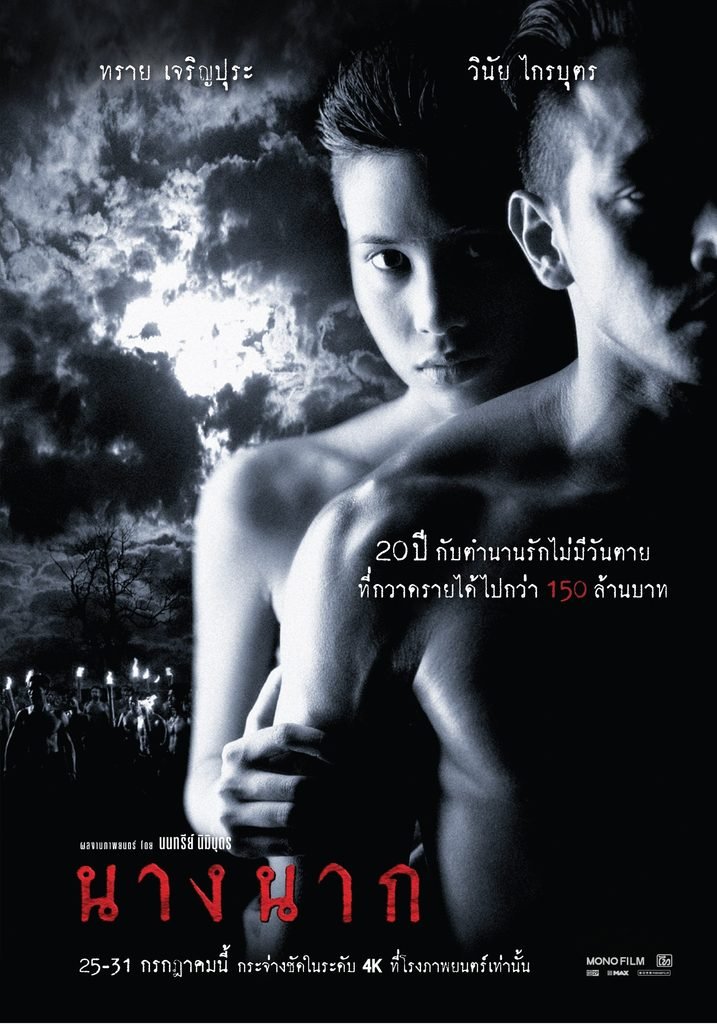
1. Nang Nak (1999)
Directed by Nonzee Nimibutr
In 1997, the Thai baht collapsed, the Asian Financial Crisis gutted Bangkok’s economy, and the local film industry was practically declared dead. Hollywood imports held a complete monopoly on domestic theaters. Then Nonzee Nimibutr took an ancient ghost folklore that every Thai person had heard fifty times, Mae Nak Phra Khanong, the devoted wife who dies in childbirth and haunts her canal hut waiting for her soldier husband—and treated it like a prestige period tragedy instead of cheap camp.
No goofy rubber masks or cartoon lightning. Nonzee gave audiences the raw, mud-slicked realism of 19th-century Siam: real canal water, rotting floorboards, natural candle flicker, and the devastating, sorrow-soaked gaze of a teenage Intira Jaroenpura. The movie didn’t just break box office records; it beat Titanic in the local market, pulled in nearly 150 million baht, and dragged Thai cinema out of the grave by proving domestic audiences were starved for their own stories.
2. Uncle Boonmee Who Can Recall His Past Lives (2010)
Directed by Apichatpong Weerasethakul
Tim Burton’s Cannes jury handed Apichatpong the Palme d’Or in 2010, and half the mainstream film press didn’t know who he was or what hit them.
Uncle Boonmee isn’t interested in three-act story arcs or Hollywood pacing. A dying beekeeper spends his final days in the Isan jungle, sitting down to dinner with the translucent ghost of his deceased wife and his long-lost son, who has returned from the forest transformed into a hairy, red-eyed monkey spirit. Shot on textured 16mm celluloid, it weaves ancient animist reincarnation directly into the blood-stained political memory of Thailand’s Cold War anti-communist purges in Nabua. It feels less like watching a movie and more like waking up inside someone else’s fever dream.
3. Ong-Bak: Muay Thai Warrior (2003)
Directed by Prachya Pinkaew
Before 2003, Hollywood action had turned into an antiseptic green-screen blur of wire-work and stunt-double edits. Then Tony Jaa dropped out of a tree onto two henchmen and broke the rules of modern fight choreography.
Conceived by Prachya Pinkaew and legendary stunt coordinator Panna Rittikrai, Ong-Bak carried a simple motto: no wires, no CGI, no safety pads. Jaa didn’t just perform Muay Thai in the traditional martial arts movie template, he weaponized Muay Boran on camera, taking direct, unpadded impacts and launching real flying elbow strikes across unbroken, continuous takes. At its core, the story of a rural boy fighting through the sleazy Bangkok underworld to retrieve his village’s stolen Buddha head captured an old, visceral anxiety: rural spiritual innocence getting chewed up by modern urban corruption. It grossed over $20 million worldwide and forced Hollywood to rewrite its fight choreography.
4. Shutter (2004)
Directed by Banjong Pisanthanakun and Parkpoom Wongpoom
Most horror films try to startle you. Shutter prefers to break your posture.
Banjong and Parkpoom took the old, eerie urban legend of spirit photography and turned it into an agonizing psychological trial. A sleazy fashion photographer runs over a young woman on an empty highway, speeds off, and slowly watches his life unravel as pale faces bleed into his photo prints and his old college buddies start jumping off rooftops. It’s tight, relentless, and completely unsparing about karmic retribution and predatory men. And that final reveal in the darkroom mirror? Two decades later, it remains one of the single most sickening, indelible climaxes in the history of Asian horror.
5. Pee Mak (2013)
Directed by Banjong Pisanthanakun
Nine years after giving the world night terrors with Shutter, Banjong returned to the Mae Nak legend and pulled off a commercial miracle: he turned the country’s most terrifying ghost story into a riotous, tear-stained slapstick comedy.
Mario Maurer plays Mak with a naive, goofy heart, while Davika Hoorne radiates ethereal, tragic grace as his deceased bride Nak. But the secret sauce was Mak’s quartet of cowardly army buddies, who spend the entire film playing frantic, whisper-quiet charades behind his back trying to warn him his wife is a decomposing spirit without getting killed themselves. It smashed through the 1-billion-baht ceiling across Southeast Asia, packing theaters with three generations of families sitting side-by-side.
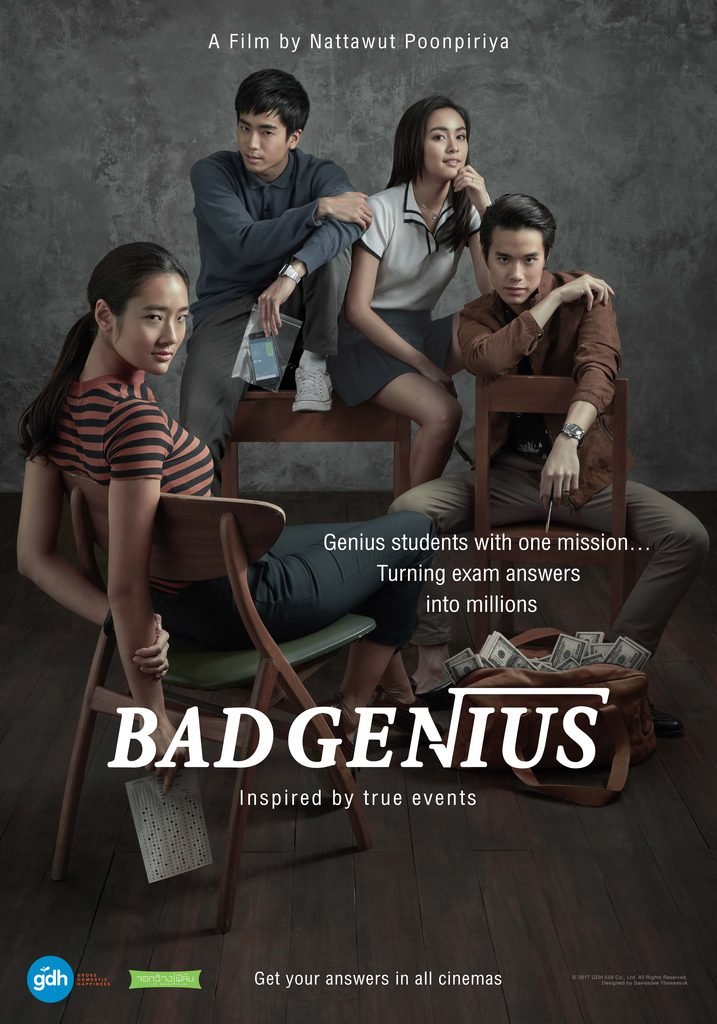
6. Bad Genius (2017)
Directed by Nattawut Poonpiriya
Nattawut Poonpiriya took a handful of high school standardized test booklets, a couple of analog lead pencils, and a ticking wristwatch, and made them feel more dangerous than a bank heist.
Inspired by real-life international testing ring scandals, the film follows Lynn (Chutimon “Aokbab” Chuengcharoensukying), a working-class math prodigy who realizes she can fleece her school’s ultra-wealthy, underachieving elite by orchestrating an exam-cheating syndicate. The tension during the Sydney STIC exam sequences makes your chest tighten. Underneath the slick, rhythmic, Soderbergh-style editing sits a brutal critique of Southeast Asia’s pay-to-play education system, where rich kids buy futures while poor kids gamble their lives just to compete. It cleared over $40 million in China alone, proving Thai studio storytelling could run circles around foreign blockbusters.
7. Black Silk (Prae Dum, 1961)
Directed by Rattana Pestonji
Decades before any “New Wave” had a name, Rattana Pestonji was fighting an uphill battle against an industry that didn’t care about cinematic craft. At a time when Thai cinema survived on cheap, soundless 16mm films that had to be dubbed live by voice actors standing behind the theater screen, Pestonji went rogue: he shot on 35mm widescreen with live, synchronized optical sound.
Black Silk is a suffocating, gorgeous neo-noir about a virtuous young widow stuck in mourning black who gets pulled into a web of nightclub extortion and murder. Influenced by French poetic realism and American noir shadow-play, Pestonji bypassed theatrical pantomime for genuine psychological dread. It was the first Thai film to compete at the Berlin International Film Festival, and it remains a masterwork of uncompromising visual grit.
8. Plae Kao (The Scar, 1977)
Directed by Cherd Songsri
Cherd Songsri made Plae Kao with a chip on his shoulder. He was furious that international audiences viewed Siamese culture as backwards or kitschy, so he set out to capture the agrarian soul of the central plains with the scale of high opera.
Adapted from Mai Muangderm’s classic novel, the story follows Kwan and Riam, two peasant lovers from Bang Kapi who swear eternal love at a village spirit shrine before aristocratic greed and rapid urban development tear them apart. Starring Sorapong Chatree, the film turned the everyday labor of water buffalo, muddy canals, and folk courtship songs into painterly visual poetry. It packed domestic theaters for months, swept awards, and won the Grand Prix at the Three Continents Festival in Nantes, proving that a story rooted entirely in rural soil could move audiences across the globe.
9. The Legend of Suriyothai (2001)
Directed by Prince Chatrichalerm Yukol
No production in Southeast Asian history matches the sheer logistical madness of The Legend of Suriyothai. Prince Chatrichalerm Yukol spent five years marshaling thousands of costumed extras, full naval armadas, and herds of battle-trained elephants to resurrect the 16th-century clash between Ayutthaya and the Burmese Toungoo Empire.
The story centers on Queen Suriyothai, who famously charged her war elephant into combat to take a lethal spear intended for her husband. With historians auditing every piece of jewelry, armor, and court etiquette, the film felt less like a movie and more like a national coronation. It earned over 320 million baht in Bangkok alone, shattering every previous record, and was later recut by Francis Ford Coppola for international distribution.
10. How to Make Millions Before Grandma Dies (2024)
Directed by Pat Boonnitipat
In an era where streaming algorithms demanded louder plots and relentless hooks, Pat Boonnitipat delivered an absolute masterclass in quiet, unhurried restraint.
M (Putthipong “Billkin” Assaratanakul) is an aimless young dropout who volunteers to care for his dying grandmother (Usha Seamkhum) in Talat Phlu, openly plotting to inherit her unrenovated shophouse ahead of his squabbling uncles. There are no soaring violin crescendos or manipulative hospital scenes; the film’s power lives in the scrape of a metal spoon on a porcelain bowl, the monotony of boiling congee at 5:00 AM, and the quiet indignity of aging in an immigrant family. The film became an unprecedented pan-Asian phenomenon, pulling in over $73 million worldwide and cementing itself as the highest-grossing Thai film in global box office history. It doesn’t rely on spectacle—just the raw, devastating honesty of what families owe one another before the time runs out.