

Step through the sliding glass doors of an upscale Bangkok mall on a stifling Saturday afternoon, and the air-conditioned chill hits you alongside something violently low-frequency. The polished marble floor actually hums under your sneakers. Around the mezzanine, hundreds of kids, university students in rumpled canvas totes, thirty-something programmers in wire-rim glasses, teenagers balancing bubble tea on their knees, are shouting in a feverish, phonetic mash of Japanese and Thai. They swing glowsticks with terrifying, metronomic abandonment, executing full-body wotagei lunges right outside a high-end French bakery.
Back in the late 2010s, global pop pundits had already closed the book on the future of Asian music. The consensus was unanimous: South Korea had won. K-pop was sleek, hyper-stylized, geometrically perfect, and engineered to conquer Spotify algorithms. Japan’s domestic idol industry, with its clunky CD box sets, analog handshake tickets, and bizarre embrace of amateurism, looked like a Galapagos island anomaly doomed to fade into its own aging archipelago.
Then Thailand decided to throw millions of dollars, infinite sweat, and an entire generation’s collective devotion at the sprawling Japanese girl-group machine.
To understand why a franchise like AKB48 struck gold in the humid belly of Southeast Asia, you have to look at the crushing emotional exhaustion of growing up middle-class in modern Bangkok. Elite schooling in Thailand is a brutal, relentless meat grinder of weekend cram academies, filial guilt, and social face-saving. K-pop, while revered, can sometimes feel like an extension of that pressure: its stars emerge from years of basement-level trainee hell as untouchable, immaculate human beings who never miss a key or drop a hair out of place. It inspires awe, but it rarely offers comfort.
The Japanese idol model, on the other hand, is built on the radical appeal of watching someone completely bomb.
The whole engine runs on public stumble-and-recover. A fourteen-year-old girl gets handed a microphone, her voice cracks mid-chorus, her feet tangle in her petticoats, and she bursts into tears on stage. In Seoul, that’s an industrial nightmare. In the Japanese idol universe, that is the sacred zero point—the moment the ticket-buying public decides to adopt her soul. Watching an awkward kid claw her way toward basic competence mirrors the quiet panic of every Thai teenager trying to figure out how to survive their own family expectations. It reframes struggle not as a private shame, but as a spectator sport deserving of love.
When BNK48 unveiled its “Fish Tank” a glass-fronted live broadcasting studio parked smack in the middle of The EmQuartier, they accidentally cracked Bangkok’s urban code. Bangkok doesn’t really do sprawling outdoor public squares; the tropical heat is suffocating, the sidewalks are narrow obstacle courses of cracked concrete and motorbikes, and urban life inevitably retreats into vast, air-conditioned megamalls. By sticking teenage idols in a literal storefront, they wove the fandom straight into the everyday cadence of city life. You didn’t have to wait six months for an arena tour. You grabbed a bowl of boat noodles, picked up your dry cleaning, and spent forty-five minutes watching a high-schooler attempt to fold origami on camera.
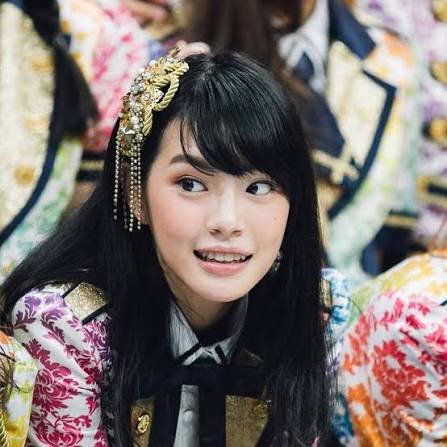
The dam truly burst late in 2017 with “Koisuru Fortune Cookie.” It was one of those rare, inexplicable cultural contagions that defies cynical analysis. A relentlessly sunny, slightly dated J-pop melody translated into lilting Thai, anchored by a simple dance move that looked like scooping steamed jasmine rice out of a pot. Within months, it was inescapable. Tuk-tuk drivers had it blaring from makeshift speaker rigs; corporate HR departments were staging company-wide lip-sync competitions, even stern-faced military officers and cabinet ministers were awkwardly swaying on morning television programs, scooping their invisible rice.
At the center of that mania stood figures like Cherprang Areekul, who shattered the patronizing Western assumption that female pop idols were merely decorative puppets. An honors chemistry researcher at Mahidol University, Cherprang would spend her mornings co-authoring peer-reviewed papers on blue light emission and her evenings commanding a stage of forty dancing girls while fielding questions from aggressive entertainment reporters with the poise of an ambassador. She offered young Thai women a radical template: you could like frilly dresses and still possess an iron will.
Then came the sister acts. CGM48 took the blueprint up north to Chiang Mai, swapping the relentless concrete pace of Bangkok for traditional northern Lanna textiles, local dialect lyrics, and mountain vistas, proving that provincial identity could punch straight through central Thai media dominance. At the helm was Izuta Rina, an original AKB48 member from Japan who packed up her life, moved to Thailand, mastered the language, and dedicated herself to coaching a room full of northern kids. It was a fascinating, border-crossing alchemy of Japanese work ethic and northern Thai easygoing warmth (muan).
Of course, the machinery beneath the smiles is notoriously calculating. The heart of the idol ecosystem is the Ota, the die-hard fans who run what amount to shadow investment banks disguised as fan clubs. When the annual Senbatsu general elections roll around, where fan votes dictate which girls get to sing on the next single, these clubs operate like seasoned political campaign committees.
Rooms of university graduates and tech workers coordinate international currency purchases to snag voting codes, build data sheets modeling voting drop-offs, and buy out every LED billboard at major metro stations. Millions of baht are mobilized in a matter of weeks. An older fan standing in a handshake queue isn’t just buying eight seconds of awkward chit-chat with an eighteen-year-old, he’s buying a ticket into a hyper-structured, egalitarian clubhouse where a corporate accountant, a graphic designer, and a street-food vendor stand side by side, trading glossy photo cards and tracking voting margins without anyone asking about pedigree, class, or salary.
That obsessive energy routinely spills over the edges of pop music. When those same coordinated fan networks decide to pool money to buy hospital oxygen concentrators during a pandemic wave, donate books to rural schools in Chiang Rai, or clear trash out of municipal waterways, they treat civic action with the same frantic, spreadsheets-out intensity they bring to an idol’s birthday campaign.
It is easy to look at the glowsticks, the synchronized yelling, and the corporate merchandise from the outside and dismiss the whole circus as a cynical foreign export imported to milk impressionable youth. But that misses the sheer human necessity of it. Thai fans didn’t simply surrender to a Japanese corporate formula; they swallowed it whole, seasoned it with their own deep-seated desire for playfulness, and used it to carve out a noisy, tearful, collective sanctuary inside a hyper-pressurized world.